
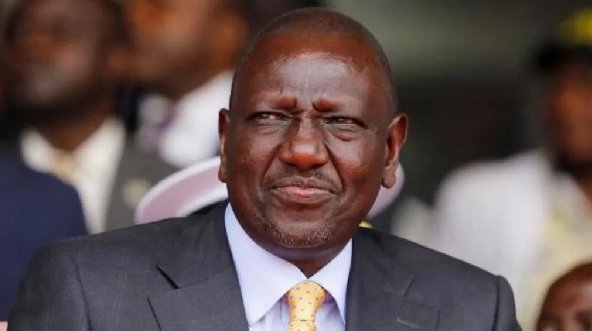
William Ruto has come under heavy criticism across social media after comments he made about Nigerian-accented English triggered outrage among Africans online.
Speaking to members of the Kenyan diaspora in Italy, the president suggested that Nigerians can be difficult to understand when speaking English, joking that a translator might be needed. He went on to praise Kenya’s education system, claiming it produces some of the best English speakers globally.
The remarks quickly sparked backlash, particularly from Nigerians who accused the Kenyan leader of belittling a fellow African nation.
Among those who reacted strongly was Zimbabwean journalist Hopewell Chin’ono, who argued that English — being a colonial language — should not be used as a benchmark for intelligence or national progress.
Both Nigeria and Kenya, as former British colonies, use English as an official language. However, each country has developed its own distinct form of spoken English, shaped by local languages and cultural influences.
Nigeria, with over 500 indigenous languages, has a unique rhythm and pronunciation style, while Kenya’s linguistic diversity — including Bantu, Nilotic, and Cushitic languages — contributes to its own accent variations.
Former Nigerian senator Shehu Sani also criticised the comments, pointing out Nigeria’s global literary influence. He referenced renowned figures such as Wole Soyinka, Chinua Achebe, and Chimamanda Ngozi Adichie as evidence of the country’s strong command of the English language.
Many social media users described the remarks as unnecessary and urged the Kenyan president to focus on domestic challenges such as unemployment and the rising cost of living.
The incident has reignited the long-running online rivalry between Nigerians and Kenyans, often played out through humorous — and sometimes heated — exchanges on social media platforms.
Some observers believe the comments may be linked to recent remarks by Bola Tinubu, who recently suggested that Nigerians were better off than citizens of several other African countries, including Kenya.
While there has been no official clarification from the Kenyan government, some supporters have defended Ruto, saying his comments were meant in jest and have been taken out of context.
Nigeria remains the country with the largest number of English speakers in Africa. Over time, its version of the language — often referred to as Nigerian English — has evolved into a widely recognised and influential form, shaped by everyday usage and cultural context.
Expressions originating from Nigeria continue to gain global recognition, while the country’s large diaspora, especially in the UK, plays a key role in spreading its linguistic influence worldwide.