
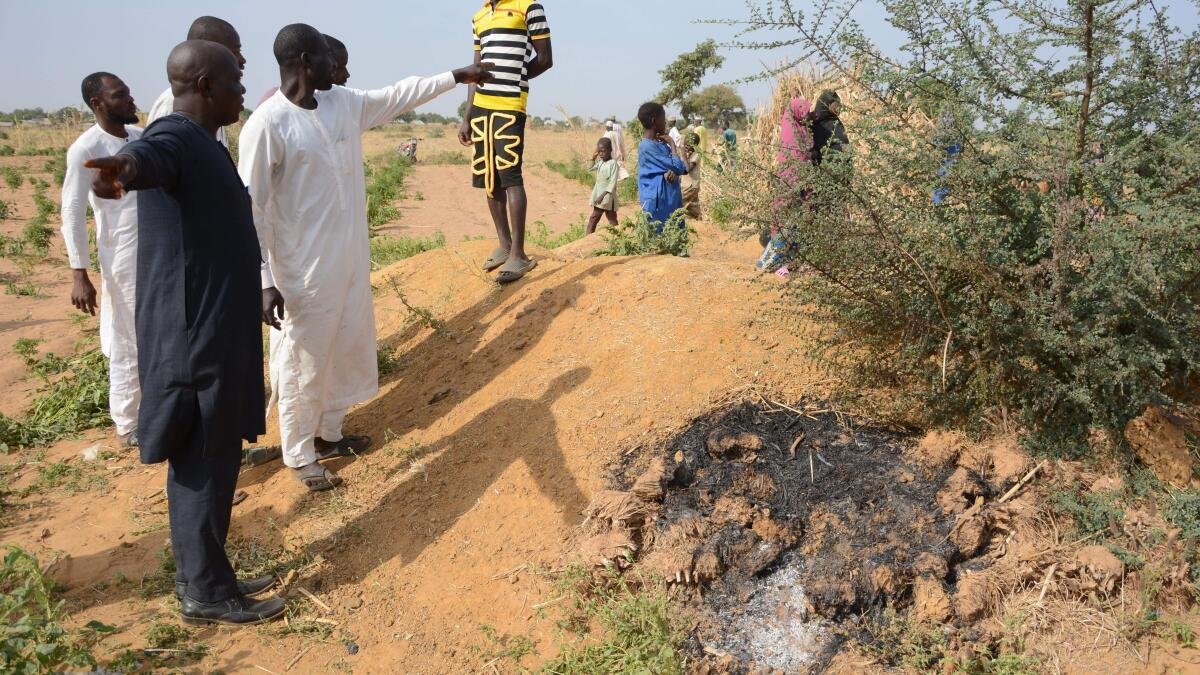
Fear has gripped communities across the dry savannah and rugged highlands of north-western Nigeria for years — long before US air strikes hit militant camps in the region on Christmas night.
The heavily armed fighters belong to Lakurawa, an Islamist militant group that has entrenched itself in Tangaza, a remote area of Sokoto State near the border with Niger. Dressed in camouflage and distinctive desert turbans, the militants are believed by locals to originate from Mali and Niger, deep within the Sahel.
Residents say the group has lived openly in the area for several years, operating from isolated camps and ruling surrounding villages through fear.
US and Nigerian authorities now say Lakurawa is linked to Islamic State–affiliated networks operating in the Sahel, although the Islamic State itself has not publicly acknowledged any formal connection.
When journalists visited Nukuru, a small village roughly 10 kilometres from the strike zone, fear was palpable. Villagers were reluctant to speak, worried that any disclosure could invite violent reprisals.
Only after assurances of anonymity did some agree to talk — quietly and cautiously.
Security forces escorted the reporting team into the area, warning that police patrols rarely venture there due to the militants’ superior firepower. Journalists were also advised not to remain long, amid fears that fighters could plant landmines along exit routes.
One local farmer said that shortly after the air strikes, militants fled into nearby communities.
“They arrived on about 15 motorcycles, three fighters on each,” he recalled. “They were calling others, telling them to leave quickly. They looked shaken.”
The militants reportedly escaped with personal belongings but carried no bodies, leaving uncertainty over whether the strikes caused casualties.
Residents of Nukuru — a settlement of about 40 mud houses and thatched huts — described the terrifying impact of the bombardment.
“The ground shook. Roofs were damaged. We heard objects falling from the sky, then fire,” said a 70-year-old villager. “Nobody slept that night.”
Despite the strikes, villagers fear the group will regroup. Lakurawa fighters are highly mobile, using motorcycles to navigate the rough terrain where state authority is almost absent.
There are no paved roads, hospitals or schools in the area. Donkeys remain the primary means of transport.
By day, villagers say Lakurawa fighters patrol communities, acting as the de facto authority. Farmers are forced to pay levies or risk beatings and livestock theft.
“They pass through almost every day,” one farmer said. “We know them by their clothes and turbans.”
The fighters reportedly speak Fulfude among themselves and use Hausa when addressing locals.
At night, they retreat to camps built on elevated ground, giving them a strategic view of the surrounding plains. Women and families are believed to live outside the camps.
When Lakurawa first arrived along the Nigeria–Niger border, they portrayed themselves as religious protectors in a region plagued by criminal gangs known locally as bandits.
Initially, their presence pushed bandits away, winning them limited acceptance. But that goodwill quickly evaporated as the militants imposed strict religious rules and punishments.
“You cannot live freely,” said a young resident. “You can’t even play music on your phone. They confiscate it — and punish you.”
Some offenders have reportedly been flogged for violating the group’s hardline interpretation of Islamic law.
Villagers say Lakurawa has recruited local youths as informants, traders and supply couriers. Some fighters are also believed to have married into border communities.
The Christmas Day strikes marked the second time the group has been targeted during the festive period. Last year, Nigerian military operations against Lakurawa killed about 10 civilians, according to residents.
Earlier this year, the Nigerian government formally designated Lakurawa a terrorist organisation, accusing it of kidnappings, cattle rustling, ransom-taking and attacks on senior officials.
When announcing the latest strikes, US President Donald Trump said the group had been killing “primarily innocent Christians” — a claim Nigerian officials dispute.
Foreign Minister Yusuf Maitama Tuggar stressed the operation was a joint US–Nigeria effort and not motivated by religion, noting that most victims living under Lakurawa’s control are Muslims.
For the communities trapped in the militants’ shadow, religion matters far less than survival.
What they want, residents say, is simple — an end to fear, and a chance to live without armed men dictating every aspect of daily life.