
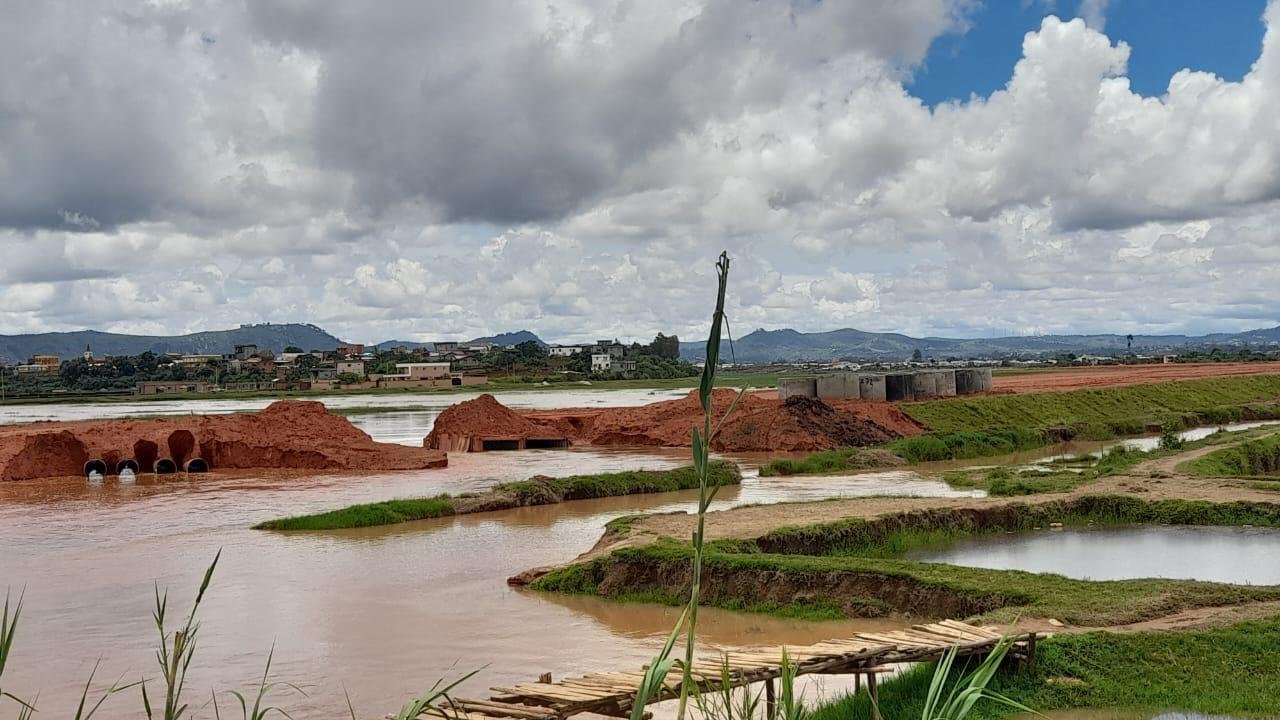
A simple red wooden stake driven into the soil outside the rural Malagasy village of Ambohidava signals a transformation that could permanently reshape the community’s future.
On a quiet, sunlit afternoon, life in the village moves gently, marked only by crowing roosters and the occasional motorbike passing through. But that calm may soon disappear. Plans are underway for a major two-lane toll highway that would cut directly through Ambohidava, potentially erasing the village altogether within two years.
Ambohidava is currently about a two-hour drive from Madagascar’s capital, Antananarivo. The proposed highway would significantly reduce travel time between the capital and Toamasina, the country’s largest port and second-largest city, with the new route running straight through the village. The red posts planted in the ground mark the future path of the road.
The highway is intended to modernise Madagascar’s transport system and stimulate economic growth, but for villagers, it comes with deep personal and cultural costs.
Seventy-year-old farmer Neny Fara has lived in Ambohidava her entire life. She began working the land as a child, cultivating rice and pineapples on fields passed down through generations. Farming has supported her family for decades, including caring for a son who is unable to work due to mental health challenges.
Now, both her rice paddies and pineapple fields fall directly in the path of the planned highway.
“I feel betrayed,” she says quietly, standing near her flooded rice field. “No one has spoken to us about these plans. This land belongs to our ancestors. Losing it is heartbreaking.”
Many farmers in the area echo her concerns, saying they have received no formal communication or compensation agreements. Authorities, however, maintain that affected residents will be compensated within a year of the road’s completion.
Construction of the first eight kilometres of the highway began earlier this year and was officially launched by then-President Andry Rajoelina before he was removed from office in a military takeover. Despite the political upheaval, the new government has confirmed that the project will continue.
The 260-kilometre highway is being built by an Egyptian construction firm and is expected to cost around one billion dollars. Toll fees are projected at approximately four dollars for cars and five dollars for trucks. Funding will come partly from the Malagasy state, with the majority sourced from international lenders.
The new road contrasts sharply with Madagascar’s existing transport infrastructure. The current main route between Antananarivo and Toamasina is narrow, heavily congested and riddled with potholes, often slowing journeys to more than 16 hours.
Truck driver Reka, who has used the route twice a week for nearly a decade, says the highway is long overdue. “The road is dangerous and exhausting,” he explains. “A better highway will change everything.”
Government projections suggest the highway could triple activity at Toamasina port, boost exports such as Madagascar’s prized vanilla, and create new jobs along the corridor. Officials also say shorter travel times could reduce vehicle emissions by up to 30%.
However, environmental and cultural concerns remain strong. Madagascar is one of the world’s most biodiverse countries, home to species found nowhere else. While earlier plans threatened untouched rainforest, authorities now say the route has been adjusted to pass through already-cleared land.
Still, villagers in Ambohidava worry about more than farmland. Many say the road cuts through ancestral burial grounds — a deeply sensitive issue in Malagasy culture, where respect for the dead is sacred.
At an informal gathering near the rice fields, residents voiced anger and fear over the project’s impact.
“We must honour those who came before us,” Neny Fara told the crowd. “We cannot allow their resting places to be destroyed.”
Madagascar’s struggle reflects a broader challenge facing many developing nations — balancing economic growth with environmental protection and cultural preservation. But for Ambohidava, with construction already advancing, the peaceful rhythm of village life may soon be changed forever.