

Along South Africa’s remote west coast, the contrast is striking. What begins as a journey through dramatic natural beauty from Cape Town slowly turns into a scarred, moon-like landscape as one heads north towards the Namibian border. The marks left behind by decades of diamond mining are impossible to miss — not only on the land, but in the lives of the people who live there.
In the far north-western region known as Namaqualand, the impoverished Nama community is still asking a painful question: what happened to the wealth extracted from their ancestral land? While diamonds from this area helped build South Africa’s economy, very little appears to have benefited the people who originally lived there.
The Nama, who live across parts of South Africa and Namibia, trace their ancestry to the Khoi and San — indigenous nomadic peoples regarded as the earliest inhabitants of the region. More than 20 years after winning a landmark court case affirming their land and mineral rights, many say they remain excluded from the riches beneath their feet.
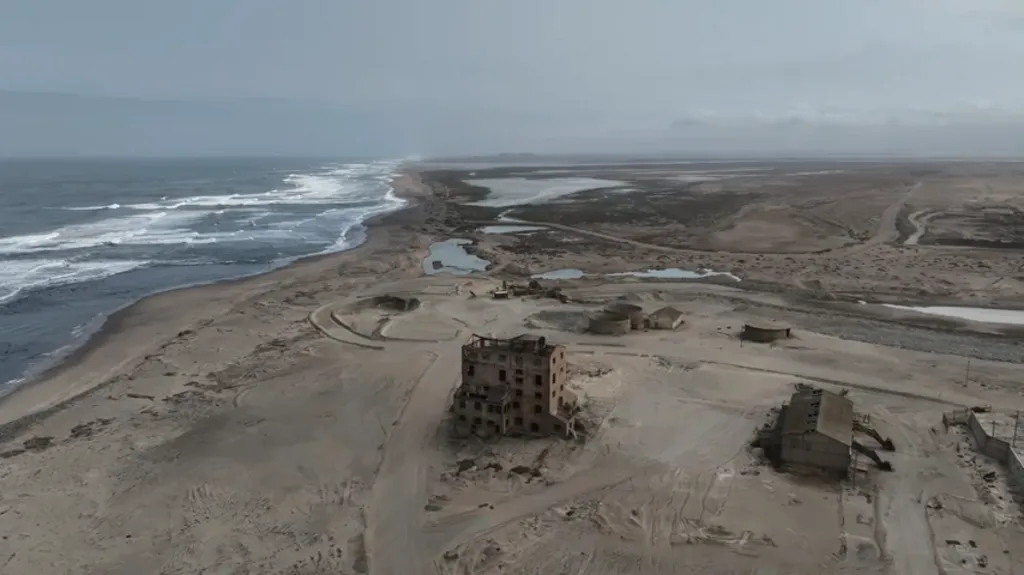
In the coastal town of Alexander Bay, abandoned mine buildings stand as symbols of decline. Andries Josephs, a former mine worker who lost his job two decades ago, says life has steadily worsened. Unemployment is high, infrastructure is collapsing and opportunities are scarce. As diamond reserves dwindled, the industry retreated, leaving behind economic hardship and environmental damage.
Nearby residential areas tell a similar story. A handful of houses sit alongside a crumbling church and a hospital struggling to provide basic services. Local development plans describe failing water and electricity systems and poor roads that make access to healthcare difficult.
Diamonds were discovered in this region in the early 20th Century, triggering a rush that transformed the land. But the Nama say they had long known about the stones. Community leader Martinus Fredericks recalls family stories of children learning to count using diamonds. In 2012, elders appointed him to lead efforts to reclaim their ancestral land.
According to Fredericks, the Nama lived as herders and traders until European settlers disrupted their way of life. In the mid-1800s the area was annexed by the Cape Colony, and after diamonds were found in the 1920s, Nama communities were forcibly removed from land near the Orange River. This displacement continued through apartheid and even after South Africa’s transition to democracy in 1994.
Successive governments argued that diamond wealth served the national interest, not just local communities. But frustration among the Nama never faded. Fredericks says poverty, unemployment and lack of prospects remain widespread, despite the region’s mineral wealth. He insists development must include the community as an equal partner.
In 2003, after a five-year legal battle with the state and the state-owned mining company Alexkor, South Africa’s Constitutional Court ruled that the Nama had inalienable rights to their land and minerals. Yet four years later, a deal was struck giving Alexkor majority control of mining rights, with the remainder allocated to the Richtersveld community through a communal property association.
Fredericks disputes the legitimacy of that agreement, arguing it was made without proper community consent and that the people have seen no meaningful benefit. Alexkor rejects claims that the community gained nothing, saying it paid hundreds of millions of rand in reparations and development grants. However, the company’s current leadership has admitted that mismanagement and corruption hindered the full economic benefit reaching the community.
Parliamentary hearings have since revealed concerns that the communal property association was dysfunctional, with large sums paid out but little evidence of impact on residents. Attempts to get answers from the association have gone unanswered.
Beyond money, environmental damage remains a major concern. Large-scale mining operations, Fredericks says, stripped the land and left without proper rehabilitation. Abandoned pits and degraded landscapes remain common across Nama land. While major mining firms say responsibility for rehabilitation has been transferred to new owners, the scars remain visible and worrying.
As mining activity threatens to expand further down the coast, fears are growing that environmental destruction will spread. Government authorities have yet to clearly address claims that companies are failing to restore mined land.
For Fredericks, the issue is ultimately about identity and survival. He says the Nama people cannot exist without control over their land, arguing that the bond between the community and its ancestral territory cannot be separated. Legal action is now under way to challenge the structures meant to represent the community.
“The government should return what is ours,” he says. For the Nama, the fight is not just about diamonds — it is about justice, dignity and reclaiming a future rooted in their past.