
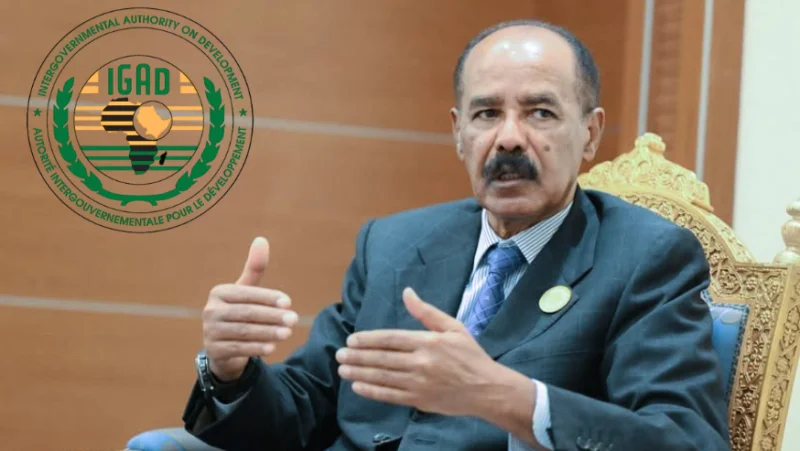
Eritrea has officially withdrawn from the East African regional bloc, the Intergovernmental Authority on Development (Igad), accusing the organisation of abandoning its founding principles and becoming a political tool against certain member states.
In a statement issued on Friday, Eritrea’s foreign ministry said Igad no longer serves the interests of regional peace and stability, arguing that the bloc has forfeited its legal mandate and offers no meaningful strategic benefit to its members. The decision comes amid rising diplomatic tensions between Eritrea and neighbouring Ethiopia, fuelling fears of renewed armed conflict between the two long-time rivals.
Igad responded by rejecting Eritrea’s claims, stating that Asmara had failed to make any tangible reform proposals or actively engage with the organisation since rejoining in 2023. The bloc added that Eritrea had not participated in Igad meetings, programmes or activities during that period.
Igad was formed to promote regional stability, economic cooperation and food security in East Africa. Its members include Ethiopia, Kenya, Sudan, South Sudan, Uganda and Djibouti. Eritrea has long accused the organisation of siding with Ethiopia in regional disputes, a claim Igad has consistently denied.
This is not the first time Eritrea has quit the bloc. It previously withdrew in 2007 during a bitter border dispute with Ethiopia and only rejoined last year. The latest exit comes against the backdrop of worsening relations between Asmara and Addis Ababa.
Since 2023, Ethiopia’s Prime Minister Abiy Ahmed has repeatedly called for his landlocked country to gain access to the Red Sea, including through Eritrean territory. These remarks have drawn a sharp response from Eritrea, which gained independence from Ethiopia in 1993 after a decades-long armed struggle.
Some Ethiopian officials have gone further by questioning Addis Ababa’s recognition of Eritrean independence, raising alarm in Asmara. This is despite Abiy having won the Nobel Peace Prize in 2019 for ending a 20-year border conflict with Eritrea under President Isaias Afewerki, a war that claimed more than 100,000 lives.
During earlier periods of tension, Eritrea was accused by some neighbours of destabilising the Horn of Africa by interfering in their internal affairs, allegations it has always rejected. Instead, Eritrea has accused Igad members of aligning with Western powers to undermine its sovereignty.
At Ethiopia’s urging, Igad previously called on the African Union and the UN Security Council to impose sanctions on Eritrea. Asmara also cut diplomatic ties with Djibouti, where Igad is headquartered, following a separate border dispute in 2009.
Eritrea has also expressed unease over the leadership of Igad, which is currently headed by a former Ethiopian foreign minister, reinforcing its perception of bias within the organisation.
Igad has faced growing criticism over the years for failing to deliver lasting peace and regional integration in the Horn of Africa, a region plagued by civil wars, terrorism and recurring interstate tensions.