
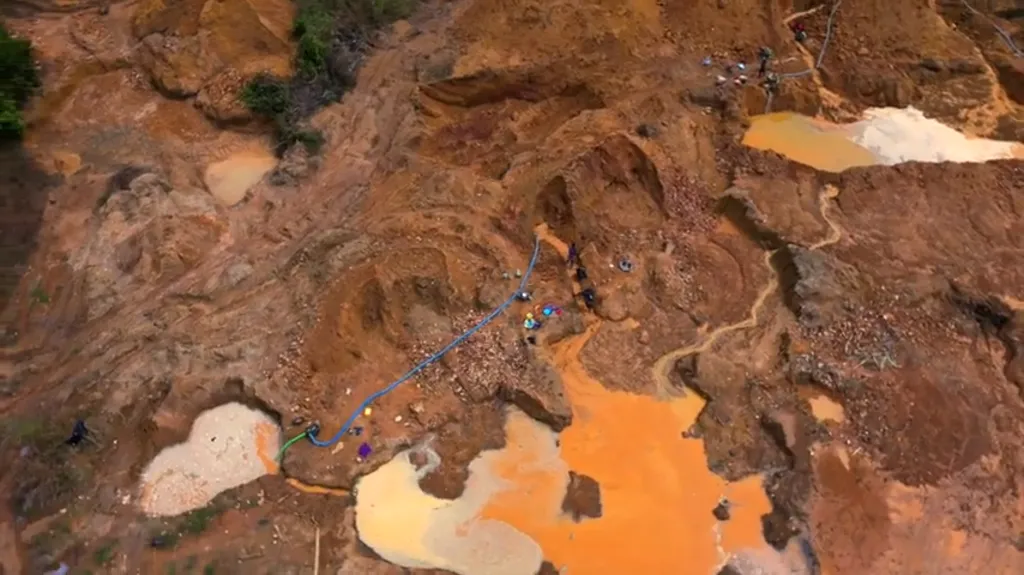
A deep sense of shock has swept through the village of Nyimbadu in Sierra Leone’s Eastern Province, where families gathered in tears over the bodies of two teenage boys killed in a collapsed gold pit.
Sixteen-year-old Mohamed Bangura and 17-year-old Yayah Jenneh had left home hoping to make a little money to support their families. Instead, the makeshift gold mine they were digging gave way, trapping and killing them. The tragedy marks the third fatal mining incident in the area in four years, and at least five children have now died in similar accidents.
Teachers and child rights advocates say more children are abandoning school for risky artisanal mining as poverty deepens in this once-diamond-rich region. Diamond deposits have dwindled, giving rise to widespread informal gold mining. Pits now appear anywhere gold is found — in farms, riverbeds, and even old burial sites — often dug without oversight and reaching depths of up to four metres.
These unsafe mines, common across several African countries, have claimed countless lives, and Nyimbadu’s residents understand the dangers all too well. Despite this, families struggling with limited income opportunities view mining as one of the few ways to survive.
At the community’s small funeral home, grief is heavy. Yayah’s mother, Namina Jenneh, a widow raising five other children, says she depended on her son’s earnings. She admits she once worked in the pits and introduced him to mining but insists she never knew he planned to work that day. When the collapse happened, she pleaded for help to clear the rubble — but rescuers arrived too late.
Local activist Sahr Ansumana, who is involved in child protection efforts, says families often encourage their children to mine out of desperation. “Many parents feel they have no choice,” he says. “They’re single mothers, widows, and struggling to feed their homes. The situation is getting out of control.”
But even with two funerals fresh in their minds, the pits remain crowded. A day after the boys were buried, children and adults were already back at work, panning soil along the riverbank and sorting manually dug earth in search of gold.
Among them is 17-year-old Komba Sesay, who dreams of becoming a lawyer but spends his days mining to pay for school exams. He earns only about $3.50 a week — less than half the national minimum wage — and says he hates the work yet feels trapped. On rare lucky days, he can make as much as $35, giving him hope that keeps him in the pits despite the danger.
Teachers are also leaving their classrooms to join the hunt for gold. The headteacher of Gbogboafeh Aladura Junior Secondary School, Roosevelt Bundo, says the promise of mining income often pulls both students and educators away from school. He admits many teachers earn so little that the pits appear more profitable.
Mining zones, once small and temporary, have expanded into growing settlements over the past two years. Despite government statements promising action, locals say survival instincts outweigh policies on education.
Information Minister Chernor Bah insists the government remains committed to schooling, pointing out that Sierra Leone allocates nearly 9% of its GDP to education — the highest in the region — including funding for teachers, feeding programmes, and school subsidies. Yet, in communities like Nyimbadu, poverty continues to push children toward hazardous labour.
Aid groups and local activists continue efforts to pull children out of the mines and reintegrate them into school, but without stable income alternatives, gold pits remain a powerful draw.
For the families of Mohamed and Yayah, the grief is overwhelming. Two promising young lives are gone — and with them, another piece of hope for a generation caught between poverty and peril.
“We need help,” Ansumana says quietly. “Not prayers or promises. Real help.”