
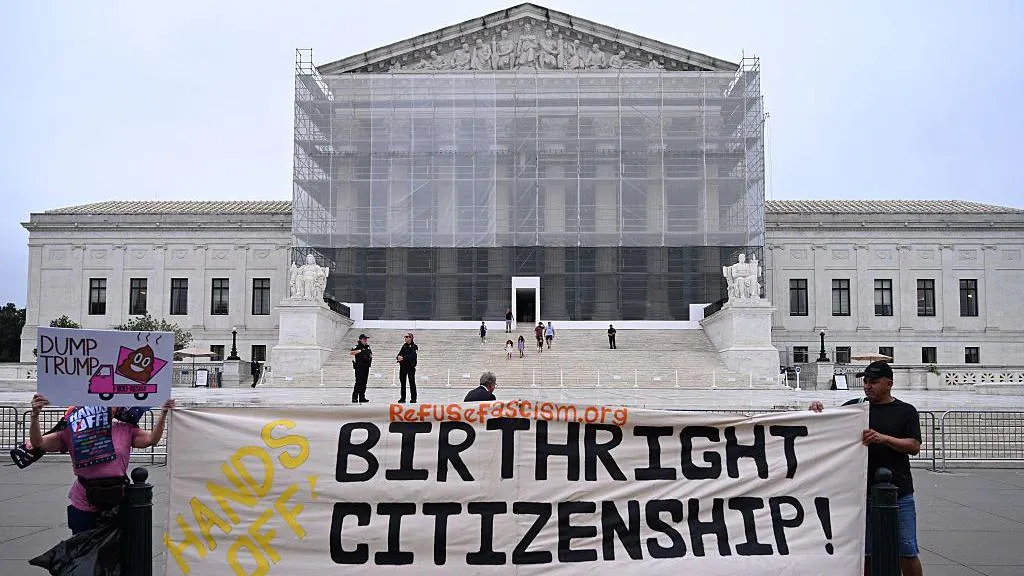
The US Supreme Court has agreed to hear a landmark case that could determine whether the long-standing guarantee of citizenship for anyone born on American soil will survive future legal challenges.
The case centers on an executive order signed by President Donald Trump on his first day in office in January, aimed at ending birthright citizenship for children born in the United States to parents without legal status or those on temporary visas. Lower courts quickly blocked the order, saying it appeared to violate the Constitution, setting the stage for a high-stakes showdown at the nation’s highest court.
The Supreme Court will now decide whether to uphold the constitutional protection that has existed for nearly 160 years or support the administration’s attempt to limit citizenship access. Oral arguments will be scheduled in the coming months, with the government facing off against immigrant parents and their newborns who are challenging the directive.
A 14th Amendment Clash
Birthright citizenship has been enshrined in the 14th Amendment since 1868. The amendment’s key citizenship clause declares that anyone born or naturalized in the United States—and “subject to the jurisdiction” of the country—is automatically a citizen. The only narrow exceptions apply to children of foreign diplomats or foreign military personnel deployed in the US.
Trump’s order sought to reinterpret that clause by excluding children whose parents are undocumented or in the country on short-term visas, arguing that such parents are not “subject to the jurisdiction” of the US in the constitutional sense.
A Decision With Global and Domestic Consequences
If the Supreme Court sides with the administration, the ruling could reshape American immigration rules and alter the status of thousands of families. If the court strikes down the order, it will reaffirm the long-held understanding that the US grants citizenship based on birthplace, regardless of a parent’s legal status.
Currently, the United States is one of around 30 countries, most of them in the Americas, that still guarantee citizenship to anyone born within their borders.
This case is expected to spark intense national debate as the court considers one of the most consequential immigration questions in modern US history.