
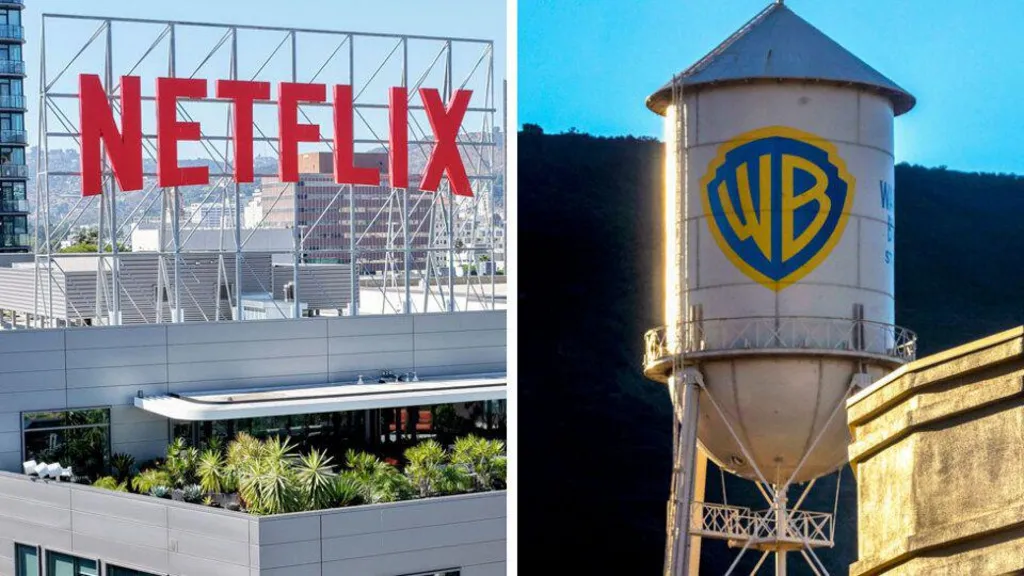
Netflix and Warner Bros are set for a massive shift in the entertainment landscape after the two giants agreed to a landmark merger that executives describe as a defining moment for the industry.
Calling it a “big day,” Netflix co-chief executive Ted Sarandos admitted the move might have caught some investors off guard but said the rare opportunity would secure Netflix’s future “for decades to come.”
Warner Bros chief executive David Zaslav echoed the sentiment, saying the partnership unites “two of the greatest storytelling companies in the world,” ensuring audiences will continue to enjoy powerful stories for generations.
The deal—valued at $82.7 billion when factoring in company debt and shares—is priced at $27.75 per Warner Bros share, with a total equity value of $72 billion. Both companies’ boards unanimously backed the acquisition.
Yet not everyone is celebrating.
Michael O’Leary, CEO of Cinema United, warned the merger represents an “unprecedented threat” to cinemas globally, suggesting the fallout could severely affect everything from major theatre chains to small-town single-screen venues.
Netflix will assume control once Warner Bros completes its planned split, separating its streaming-and-studios division from its global networks arm in the coming year. The networks division will become Discovery Global, housing channels such as CNN, TNT Sports (U.S.), Discovery, and various free-to-air European channels. Notably, TNT Sports International will remain with the division being handed to Netflix.
Industry analysts say the deal could reshape Hollywood’s power structure.
Paolo Pescatore of PP Foresight described the acquisition as a bold statement that strengthens Netflix’s ambitions to dominate streaming worldwide—but cautioned that merging two huge entertainment operations could present major hurdles for Netflix.
The sale comes after Warner Bros dismissed a full-company takeover offer from Paramount in October before opting to restructure and put itself on the market.
Tom Harrington of Enders Analysis said the merger’s regulatory fate is uncertain but warned that, if approved, the impact on cinema would be immense. He predicted large-scale reductions in TV and film production, leading to pushback from unions and industry groups. For consumers, Harrington expects prices to rise:
“Netflix would likely become more expensive, and while HBO Max might be shut down or become secondary, Netflix’s broader reach would still drive overall subscription revenue higher.”
Danni Hewson of AJ Bell added that Netflix attempted to reassure Hollywood by pledging to continue releasing Warner Bros films theatrically. She noted that regulators will closely examine whether Netflix’s expanded influence gives it too much power over pricing.
“If this deal gets the green light quickly, the cost-saving potential is huge,” she said. “But how much of those savings benefit subscribers remains to be seen.”