
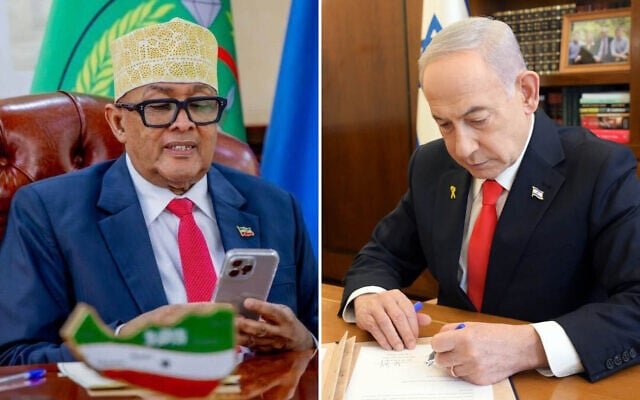
Israel’s decision to officially recognise Somaliland as an independent state has triggered widespread international condemnation, reigniting debate over sovereignty, separatism, and geopolitical influence in the Horn of Africa.
On Friday, Israel became the first country to formally acknowledge Somaliland as a sovereign nation—more than three decades after the territory declared independence from Somalia. While Somaliland’s leadership hailed the move as historic, Somalia and many global powers described it as a dangerous violation of territorial integrity.
China was among the strongest critics, warning that no country should support separatist movements for selfish interests. Beijing’s condemnation came ahead of an emergency United Nations Security Council meeting convened to discuss Israel’s decision.
Why Somaliland Seeks Independence
Somaliland, a semi-arid region along the Gulf of Aden, declared independence in 1991 after the collapse of Somalia’s central government under dictator Siad Barre. The declaration followed years of violent conflict that left tens of thousands dead and towns destroyed.
Despite lacking international recognition, Somaliland has built functioning political institutions, including its own government, security forces, and currency. Supporters argue that the region—largely populated by the Isaaq clan—has a distinct identity and has remained far more stable than the rest of Somalia, which continues to battle Islamist militancy.
Somalia, however, maintains that Somaliland is an inseparable part of its territory and has repeatedly warned that any recognition undermines its sovereignty.
Israel’s Strategic Interests
Israeli Prime Minister Benjamin Netanyahu said the decision was based on Somaliland’s “right to self-determination” and described the move as an opportunity to strengthen bilateral cooperation.
Analysts say the recognition is also driven by strategic considerations. Somaliland’s location near the Red Sea makes it geopolitically valuable, particularly as Israel seeks to counter Iran-backed Houthi forces in Yemen and secure maritime routes vital to its national security.
Following the announcement, the Houthis warned that any Israeli presence in Somaliland would be treated as a military target.
There have also been unconfirmed reports suggesting Israel explored discussions with Somaliland over the resettlement of Palestinians from Gaza—claims Israel did not comment on. Both Somalia and the Palestinian Authority have raised concerns that the recognition could be linked to such plans.
Why the Decision Has Been Widely Condemned
Countries including Egypt, Turkey, Saudi Arabia, Nigeria, Libya, Iran, Iraq, and Qatar—along with the African Union—have criticised Israel’s move, citing respect for Somalia’s territorial integrity.
The African Union has long opposed recognising Somaliland, fearing it could encourage separatist movements across the continent and destabilise already fragile regions.
Analysts warn that unilateral recognition could set a precedent allowing breakaway regions to form foreign alliances without the consent of central governments.
Muted Support from Regional Allies
Some countries believed to be sympathetic to Somaliland have remained silent. The United Arab Emirates, which operates a military port in the region, has not issued an official statement, though analysts say it quietly aligns with Israel’s position.
Ethiopia has also avoided public comment. Last year, it signed a controversial agreement with Somaliland to lease part of its coastline—an action that angered Somalia and later required Turkish mediation.
What Comes Next
Somaliland had hoped the United States might follow Israel’s lead, but President Donald Trump has signalled hesitation, suggesting Washington is unlikely to move quickly on recognition.
As diplomatic tensions rise, Israel’s decision has reshaped conversations around sovereignty, security, and foreign influence in the Horn of Africa—raising questions about whether Somaliland’s long quest for recognition has truly turned a corner or entered an even more complex phase.