
The UN Human Rights Council has unanimously approved a new independent investigation into the widespread killings reported in the Sudanese city of El-Fasher, pledging to hold those responsible to account.
At an emergency session in Geneva, UN human rights chief Volker Türk warned that the world had failed to respond to the crisis with urgency, saying bloodshed in El-Fasher was now visible even in satellite images. Since Sudan’s civil war erupted more than two years ago, over 150,000 people have died and nearly 12 million have been displaced.
The newly established inquiry is tasked with identifying those who ordered and executed the atrocities in El-Fasher, with its findings expected to be shared with the International Criminal Court.
Despite the strong mandate, concerns remain. Critics argue the investigation falls short by avoiding any reference to nations accused of sponsoring the conflict. The UAE has been repeatedly accused of supplying weapons to the Rapid Support Forces (RSF), while Iran is alleged to have armed Sudan’s military. Both countries deny these claims.
There are also fears that the financially strained United Nations may struggle to fund a thorough and credible investigation.
El-Fasher fell to the RSF last month following an intense 18-month blockade. The city was the final stronghold for the Sudanese army and its allies in Darfur. The RSF has been accused of targeting non-Arab communities in the region—accusations the group rejects.
This war has produced vast volumes of graphic digital evidence, often filmed by the perpetrators themselves. Investigators say these images and videos will be crucial in building cases against those responsible.
Mona Rishmawi, a member of the UN fact-finding mission on Sudan, said the scale of suffering in Darfur today surpasses the horrors carried out by the Janjaweed militia two decades ago. She noted that while earlier attacks focused on villages, current paramilitary assaults target entire cities and sprawling refugee camps.
She described widespread “devastating mass killings, rape, torture, disappearances, and starvation,” all taking place after more than a year of siege.
The G7 this week condemned the escalating violence, calling Sudan’s crisis the world’s largest humanitarian disaster. The statement followed a forceful appeal by US Secretary of State Marco Rubio, who urged global powers to halt the flow of weapons to the RSF and criticized unnamed countries for enabling the conflict.
The US is part of a mediation group with the UAE, Egypt, and Saudi Arabia. The bloc has proposed a three-month humanitarian truce leading to a permanent ceasefire and a nine-month transition toward civilian rule. Rubio hinted at frustration with nations accused of letting their territories be used for arms shipments.
The UAE reiterated that it does not support the RSF, instead condemning the violence in El-Fasher and accusing the Sudanese military of its own abuses—claims the army denies. The RSF also rejected all allegations against it, accusing critics of bias.
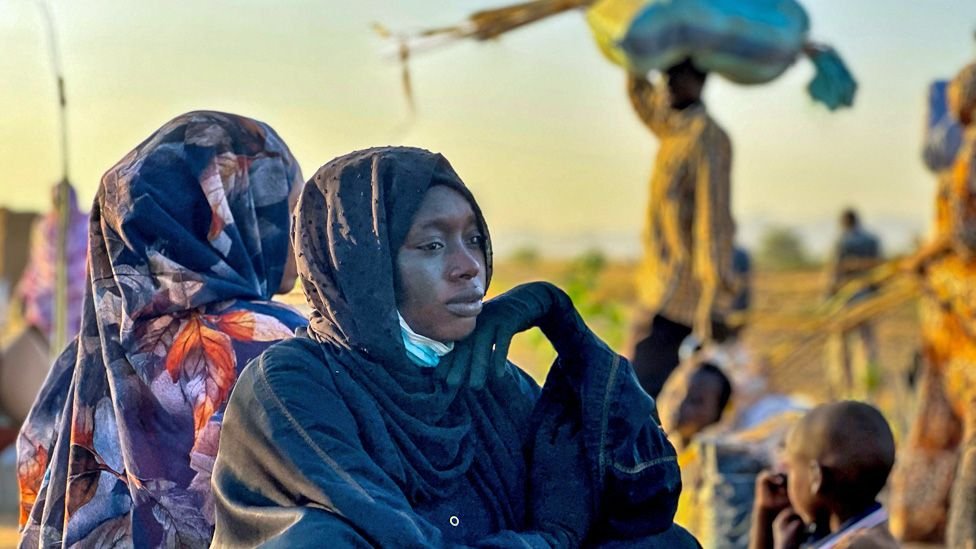
Despite talk of peace, fighting continues to intensify. Only a small number of civilians have managed to flee El-Fasher, where mass graves and blood-soaked terrain have been captured in satellite photos.
Türk called out the international community for its lack of decisive action, saying there has been “too much performance and too little real intervention” to stop the suffering.
Experts tracking arms flows say weapons used in Sudan come from a wide array of countries, including Serbia, Russia, China, Turkey, Yemen, and the UAE. UN investigators believe much of the smuggling moves through the UAE before reaching Darfur via Chad.
The UK government has also faced pressure over reports that British-made weapons may have entered the hands of RSF fighters. Officials insist the UK maintains strict export controls to prevent such diversions.
A UN arms embargo has been in place for Darfur since 2004, but human rights advocates argue it urgently needs to be expanded to cover the rest of Sudan as the war deepens.