
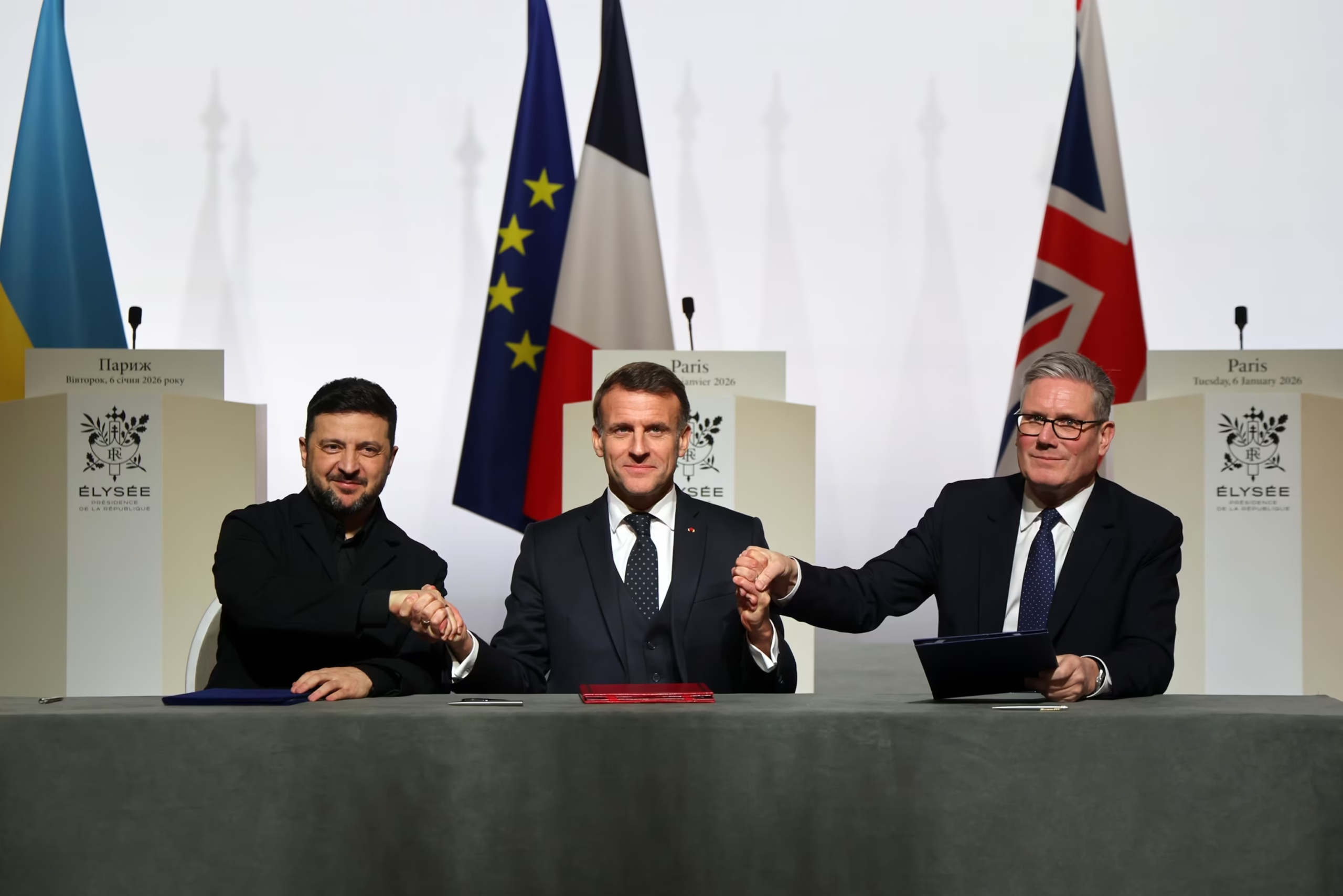
The United Kingdom and France have agreed in principle to deploy troops to Ukraine if a peace agreement is reached with Russia, UK Prime Minister Sir Keir Starmer has announced.
Speaking after talks with Ukraine’s allies in Paris, Starmer said both countries had signed a declaration of intent that would allow British and French forces to operate inside Ukraine as part of long-term security arrangements. The proposed deployment would include the establishment of military hubs across the country aimed at deterring any future Russian invasion.
French President Emmanuel Macron later confirmed that the plan could involve the deployment of several thousand troops, describing the move as part of robust security guarantees for Ukraine following a ceasefire.
Leaders and senior officials from the so-called “Coalition of the Willing” attended the Paris meeting, where discussions focused on security guarantees, post-war stability and mechanisms for enforcing a potential truce. Allies broadly agreed that the United States would play a leading role in monitoring any ceasefire, though the issue of territory remains unresolved.
Russia has repeatedly warned that any foreign military presence in Ukraine would be considered a legitimate target. Moscow has so far not responded publicly to the announcements made in Paris.
Starmer said the declaration signed by the UK and France would create a legal framework allowing partner forces to operate on Ukrainian soil, secure the country’s airspace and coastline, and help rebuild Ukraine’s armed forces for the future. He added that Britain would participate in any US-led effort to verify compliance with a ceasefire.
US officials attending the talks said durable security arrangements were essential to ensuring that the war does not restart once fighting ends. They stressed that Ukrainians needed firm assurances that peace would be permanent.
Ukrainian President Volodymyr Zelensky welcomed the outcome of the Paris meeting, describing it as a major step forward. However, he cautioned that real success would only come if the talks led to a full end to the war.
While progress has been made on security guarantees, key questions remain over territorial control. Russia currently occupies around 20% of Ukraine’s territory, including large parts of the eastern Donbas region. Moscow has insisted that Ukraine must withdraw its forces from the region as a condition for peace, a demand Kyiv has so far rejected.
Zelensky has acknowledged that Ukraine faces difficult choices as the conflict drags on, especially with another harsh winter approaching. He has suggested that troop withdrawals could only happen if both sides agree to reciprocal moves under international supervision.
Despite growing diplomatic momentum, Zelensky warned that peace is not guaranteed without Russia’s cooperation. President Vladimir Putin has previously opposed the idea of a European-led international force operating in disputed areas and has shown little willingness to compromise while Russian forces continue advancing.
Pressure is now mounting on all sides to reach an agreement, with unresolved issues around territory and long-term security guarantees expected to determine the final shape of any peace deal.