
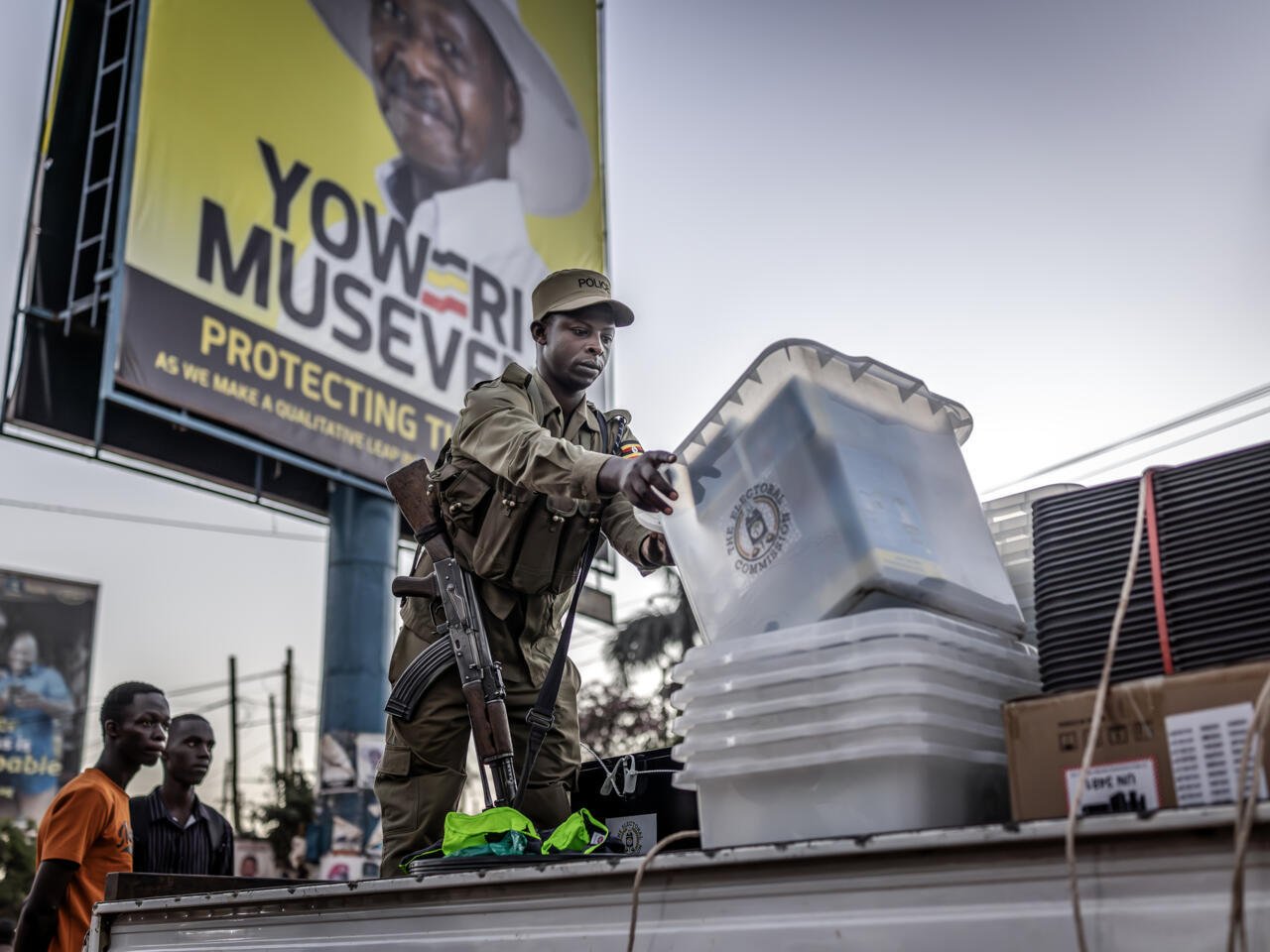
Votes are being tallied across parts of Uganda following Thursday’s presidential and parliamentary elections, as the opposition raises fresh allegations of widespread electoral malpractice amid a nationwide internet shutdown.
Opposition leader Bobi Wine has accused authorities of large-scale ballot stuffing, claiming irregularities were reported across the country. In a statement shared on social media, the National Unity Platform (NUP) candidate also alleged that several of his party’s polling agents and supervisors were abducted or forced out of polling stations. The government has not yet responded to these claims.
The voting process was plagued by delays in many areas, with some polling stations opening up to four hours late. Electoral officials blamed the disruptions on malfunctioning biometric machines used to verify voters’ identities, shortages of voting materials, and the late arrival of equipment. Some observers have linked the technical issues to the ongoing internet and mobile services shutdown.
Despite the setbacks, the Electoral Commission said all voters who were in line by 17:00 local time were allowed to cast their ballots. Polling stations closed later than scheduled as a result, and officials issued an earlier apology for what they described as “technical glitches”.
The election is largely seen as a contest between President Yoweri Museveni, 81, who has been in power since 1986 and is seeking a seventh term, and Bobi Wine, a 43-year-old musician-turned-politician campaigning on an anti-corruption and reform agenda.
The Electoral Commission has announced that the final presidential results will be declared by Saturday afternoon.
In Kampala, voting ended by early evening, but turnout appeared to be affected by the morning delays. Some voters left without voting, while others waited for hours in frustration.
“I’m angry because we were supposed to start at seven, but nothing was ready,” said Kaweesi Ismail, a voter in the capital. “Even the ballot papers were missing.”
Election chief Simon Byabakama authorised the use of the national voters’ register where biometric machines failed, insisting the process would remain lawful.
Even President Museveni acknowledged experiencing technical difficulties while voting in western Uganda, though he maintained that the machines were functional overall.
The election period has been marked by tension, with opposition groups accusing security forces of intimidation, arrests, and violent disruption of rallies. Police have rejected the accusations, blaming opposition supporters for disorder.
The internet shutdown, imposed earlier in the week, has drawn criticism from the United Nations, which described the move as deeply concerning. The opposition argues it is meant to block mobilisation efforts and prevent the sharing of evidence related to electoral fraud. In response, the NUP introduced an offline vote-monitoring app using Bluetooth technology to transmit results without internet access.
Alongside the presidential race, voters are also choosing a new 353-member parliament. Economic challenges, unemployment among young people, poor infrastructure, and access to healthcare and education remain major concerns for many Ugandans.
As counting continues, tensions remain high, with both domestic and international observers closely watching the outcome.