
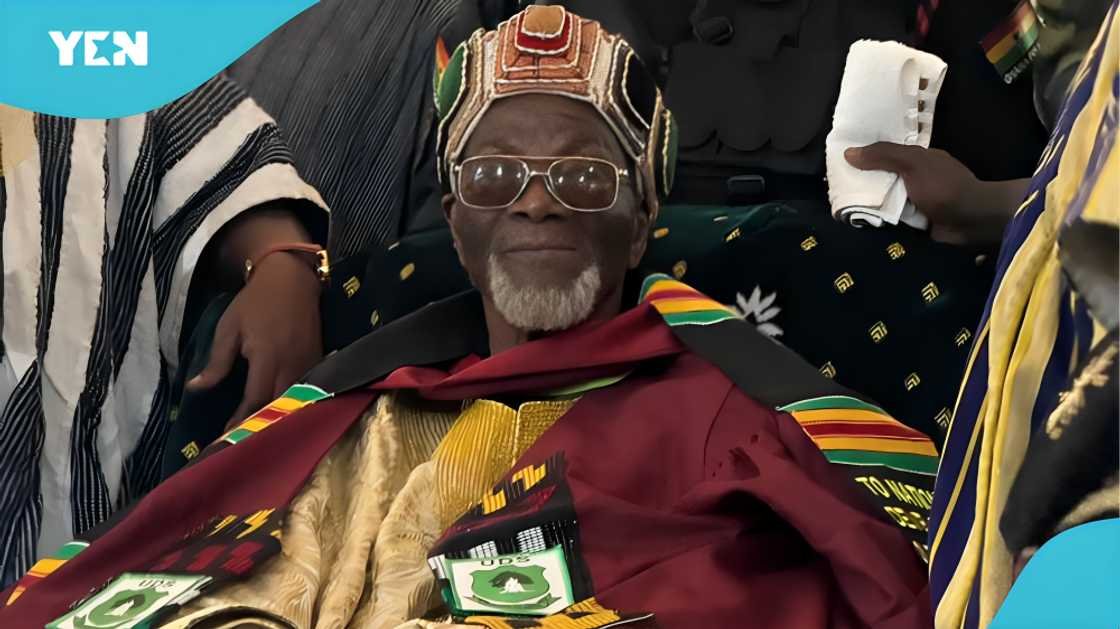
The University for Development Studies (UDS) has conferred an Honorary Doctorate Degree on the Overlord of Dagbon, Ya-Naa Abukari Mahama II, in recognition of his outstanding leadership in unifying the kingdom and advancing development across the traditional area.
The honour was presented during a special congregation at the university’s Tamale campus, where chiefs, government officials, academics, students, and community members gathered to celebrate the Ya-Naa’s achievements.
UDS Vice Chancellor, Professor Seidu Al-Hassan, lauded the Dagbon King for his pivotal role in restoring peace and reconciliation following decades of chieftaincy tensions. He noted that the Ya-Naa’s leadership helped consolidate the peace roadmap crafted under the mediation of the Asantehene, Otumfuo Osei Tutu II, which saw the successful performance of the funerals of two late overlords whose unresolved successions had long divided the kingdom.
Professor Al-Hassan praised the Ya-Naa for “charting a new path of unity and socioeconomic transformation” and for safeguarding the chieftaincy institution against political interference.
Since ascending the throne in 2019, Ya-Naa Abukari Mahama II has initiated several major development projects aimed at strengthening stability and improving livelihoods across Dagbon. One of his signature undertakings is the construction of a new Gbewaa Palace — envisioned as a powerful symbol of unity. The first phase of the project, which will serve as both the King’s residence and an administrative centre for the traditional council, is nearing completion.
Speaking at the ceremony, Northern Regional Minister Adolf Ali John thanked the Ya-Naa for his unwavering support to the Regional Security Council, describing his cooperation as crucial in maintaining peace and reinforcing the region’s recovery from years of conflict.
The honour is expected to further deepen collaboration between UDS and the Dagbon Kingdom, especially in peacebuilding, education, and community development initiatives.
For many residents, the recognition represents not only a celebration of the Ya-Naa’s leadership but also a tribute to Dagbon’s resilience and steady progress toward lasting unity.