
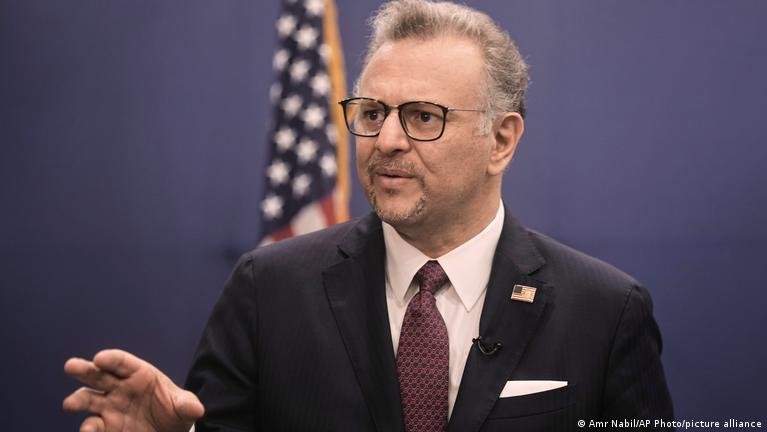
US Africa envoy Massad Boulos has dismissed claims that Washington’s new proposal to end Sudan’s civil war is biased, insisting that none of the accusations levelled by Sudan’s military leadership are grounded in fact.
Boulos, who represents President Donald Trump in Sudan peace efforts, responded after Sudan’s army chief, Gen. Abdel Fattah al-Burhan, rejected the latest ceasefire plan, accusing the United Arab Emirates (UAE) of influencing negotiations. The UAE, along with the US, Saudi Arabia and Egypt — collectively known as “the Quad” — has been mediating between the Sudanese army and the Rapid Support Forces (RSF), who have been locked in a deadly power struggle for more than two years.
Speaking at a joint media briefing with UAE adviser Anwar Gargash, Boulos said Burhan’s allegations had “no basis”, stressing that no proposal had ever been drafted to favour one side over the other.
Burhan, in a recent video address, labelled the plan “the worst ever”, claiming it sidelines the military and allows the RSF to maintain control. He accused Boulos of attempting to impose conditions on Sudan’s leadership, warning that his involvement could derail peace efforts.
While the Quad has pushed a three-month humanitarian truce to create space for a permanent ceasefire and a transition to civilian rule, the Sudanese army continues to reject what it calls “foreign interference”. The military has long accused the UAE of supplying the RSF with weapons and foreign fighters — allegations UN experts say appear credible, although the UAE has repeatedly denied any involvement.
The RSF, meanwhile, announced a unilateral ceasefire “in response to President Trump’s efforts” to end the war. But the army said the move was a political tactic, claiming RSF fighters attacked Babanusa in West Kordofan shortly afterwards.
Analysts say the RSF’s announcement is a strategic play designed to score diplomatic points, especially with the US. Earlier this month, Khartoum — under army control — was hit by a drone strike just a day after the RSF pledged an earlier humanitarian truce.
President Trump recently signaled willingness to personally intervene to help end the conflict, which has displaced more than 12 million people and triggered what the UN describes as the world’s worst humanitarian crisis. Though casualty numbers remain uncertain, US officials have referenced estimates of up to 150,000 deaths.
International outrage has grown in recent weeks following reports of mass killings, ethnic cleansing and sexual violence in el-Fasher — the last major city in Darfur that fell to the RSF. The paramilitary group denies the allegations but announced an internal investigation into abuses said to have been committed by its fighters.
Both the army and the RSF stand accused of committing war crimes since the conflict erupted in April 2023.