

The Trump administration has announced an indefinite pause on immigrant visa processing for nationals of 75 countries, a move that further tightens legal pathways for entering the United States.
The US State Department said the decision is aimed at ending what it described as abuse of the immigration system by individuals who could rely on welfare and public benefits. The suspension takes effect on 21 January, although officials have not yet released the full list of affected countries.
President Donald Trump has intensified efforts to restrict both legal and illegal immigration since returning to office. His administration had already halted immigrant visa processing for several countries, including Brazil, Iran, Russia and Somalia, before expanding the measure more broadly.
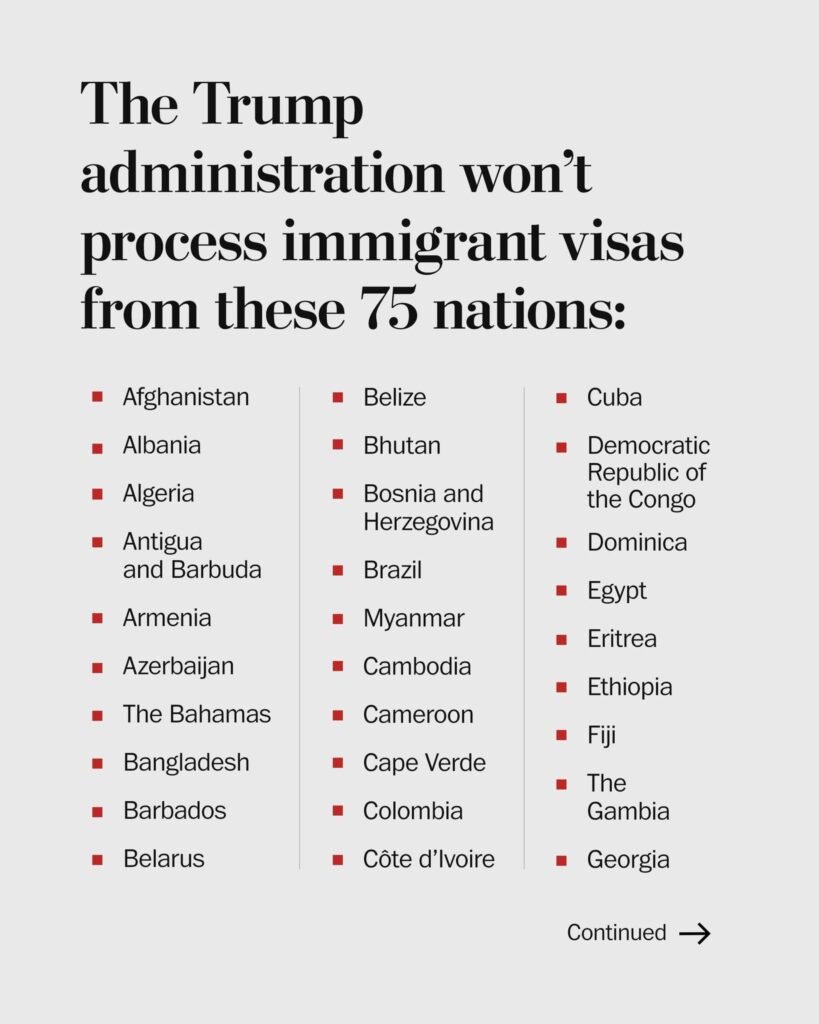
State Department spokesperson Tommy Pigott said the department would use its authority to deny entry to potential immigrants deemed likely to become a public charge on the United States. He added that the pause would allow officials to reassess visa procedures to prevent the entry of people who might exploit public resources.
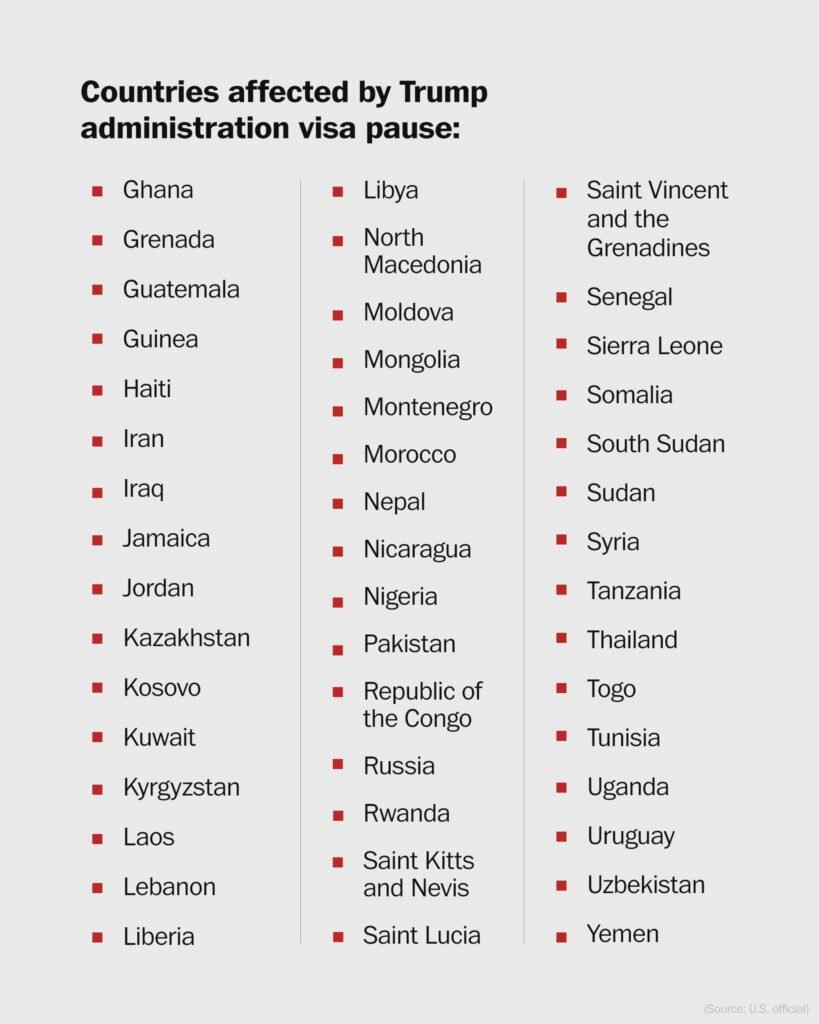
According to reports, consular officers have been instructed to stop processing immigrant visa applications from the affected countries. The suspension does not apply to non-immigrant visas, such as tourist or business travel.
The move follows a series of tighter migration controls introduced in recent months, particularly targeting countries the administration has labelled as national security risks. These include Russia, Iran, Afghanistan and several African nations.
Earlier bans were expanded after a shooting incident in Washington DC involving an Afghan immigrant, leading to entry restrictions on nationals from multiple countries and additional limits on people travelling with Palestinian Authority-issued documents.
As part of the broader policy shift, asylum claims, citizenship applications and green card processing for immigrants from countries included in earlier bans have also been placed on hold, adding to concerns among immigration advocates about the long-term impact of the measures.