
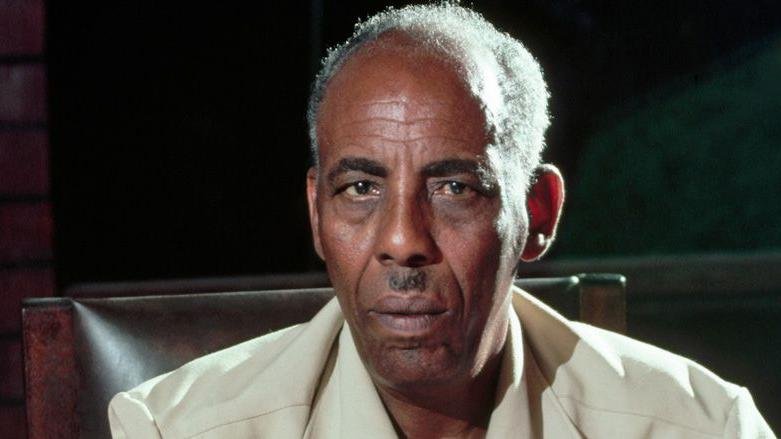
Exactly 31 years ago, two Kenyan pilots were drawn into one of the most sensitive and secretive aviation missions in East Africa’s history — flying the body of Somalia’s former ruler, Siad Barre, back to his homeland for burial.
Hussein Mohamed Anshuur and Mohamed Adan, co-founders of Bluebird Aviation, were operating out of Wilson Airport in Nairobi when a Nigerian diplomat unexpectedly arrived at their office with an unusual request. Barre had died in exile in Nigeria at the age of 80, and his body needed to be transported quietly to his hometown of Garbaharey in southern Somalia — a journey of more than 4,300km across the continent.
Speaking to the BBC for the first time about the mission, Anshuur said the diplomat made it clear that the operation had to be carried out in complete secrecy.
“We knew immediately this wasn’t a normal charter,” Anshuur said.
Barre had fled Somalia in January 1991 after being overthrown by militia forces, making the return of his body politically delicate. Multiple governments were involved, regional tensions were high, and any misstep could have triggered diplomatic fallout.
The diplomat asked the pilots to organise the flight outside normal aviation procedures — a request that alarmed them.
“If the Kenyan authorities found out, it could have caused serious problems,” Anshuur recalled.
The pilots spent hours debating the offer. While the financial reward was significant, the risks were far greater. At the time, Kenya was led by President Daniel arap Moi, and hosting or assisting the former Somali leader was already controversial.
Barre, who seized power in a 1969 coup, remained a divisive figure. Supporters viewed him as a pan-Africanist who backed liberation movements, while critics accused him of widespread human rights abuses.
After being forced out of Somalia, Barre initially fled to Kenya before being granted asylum in Nigeria, where he lived until his death from a diabetes-related illness.
The pilots asked for time to consider the request and suggested that a Nigerian Air Force aircraft be used instead. The diplomat refused, insisting the mission was too sensitive and that Kenya must not be informed.
Barre’s son, Ayaanle Mohamed Siad Barre, later told the BBC that the secrecy was not about wrongdoing but religious urgency.
“In Islam, burial must happen as soon as possible,” he said, adding that paperwork would have caused delays. He also said Garbaharey’s runway could not accommodate a large military aircraft, which is why a private airline was approached.
On 10 January 1995, the pilots agreed to proceed — but only after receiving guarantees from the Nigerian government that it would take full responsibility if anything went wrong. Two Nigerian embassy officials were also required to be on board.
In the early hours of 11 January, the pilots took off from Wilson Airport in a Beechcraft King Air B200, officially declaring Kisumu as their destination. In reality, the flight diverted mid-air to Entebbe, Uganda, exploiting gaps in radar coverage common at the time.
From Entebbe, the aircraft continued to Yaoundé, Cameroon, and then to Lagos, Nigeria. To avoid suspicion, Nigerian authorities instructed the pilots to use a Nigerian Air Force call sign when entering Nigerian airspace.
Barre’s family was waiting when the aircraft landed in Lagos later that day.
On 12 January, Barre’s wooden casket was loaded onto the plane along with family members and Nigerian officials for the final leg of the journey back to Somalia.
Throughout the flight, authorities in transit countries were never told that the aircraft was carrying a body.
After refuelling in Entebbe once again, the pilots diverted mid-air and flew directly to Garbaharey, where Barre was buried. Following the burial, they returned to Nairobi, carefully disguising their route to avoid scrutiny.
“No one asked questions,” Anshuur said. “That’s when we knew we were safe.”
Looking back, Anshuur described the mission as the most stressful flight of his career and said it would be impossible to repeat today due to improved air traffic surveillance across Africa.
“Only afterward did it sink in what we had done,” he said.