
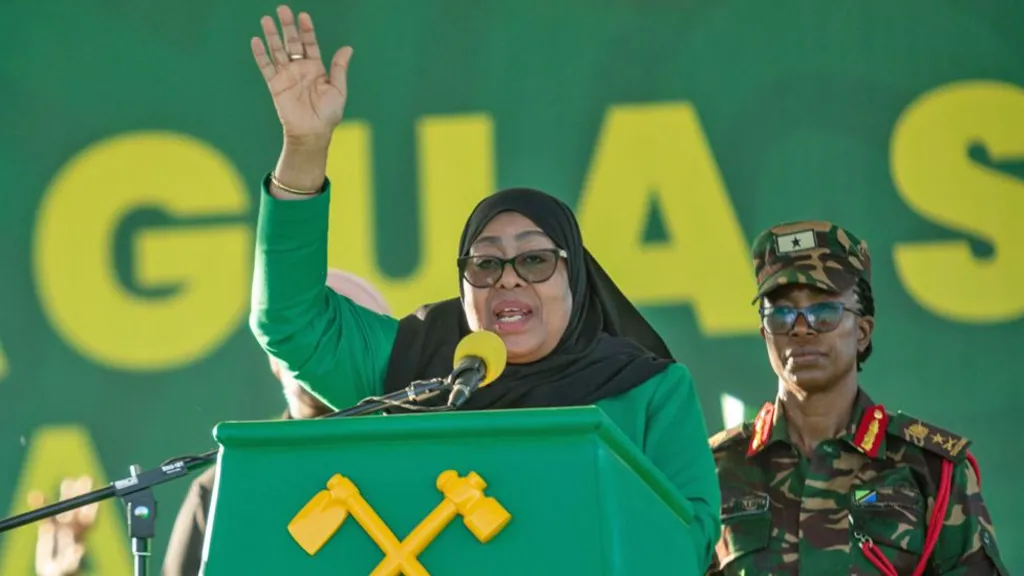
As Tanzanians prepare to vote on Wednesday, many observers say the country’s presidential election feels more like a coronation than a contest. President Samia Suluhu Hassan, the nation’s first female head of state, appears to have no serious challengers in her bid for a fresh mandate.
The 65-year-old leader rose to power in 2021 following the sudden death of President John Magufuli, who was both praised for his tough anti-corruption stance and criticized for silencing dissent and downplaying the COVID-19 pandemic. When Samia, his vice president at the time, took over, her warm and inclusive approach initially inspired hope for reform and national healing.
Under her “Four Rs” agenda — reconciliation, resilience, reform, and rebuilding — Tanzania reopened its doors to international investors and development partners, restoring relations with the World Bank and IMF. “She brought back trust with international institutions,” noted political analyst Mohammed Issa.
However, optimism has since faded. Over the last two years, reports of abductions, extrajudicial killings, and shrinking political freedoms have grown. Critics argue that President Samia’s government has become even more repressive than Magufuli’s, with opposition voices and activists facing increased persecution. “She started as a peacemaker, but now she’s known for her toughness,” Issa observed.
According to Freedom House, Tanzania’s political climate has worsened — moving from “partly free” in 2020 to “not free” in recent rankings. Despite her conciliatory beginnings, Samia’s critics accuse her of undermining democracy and stifling open debate.
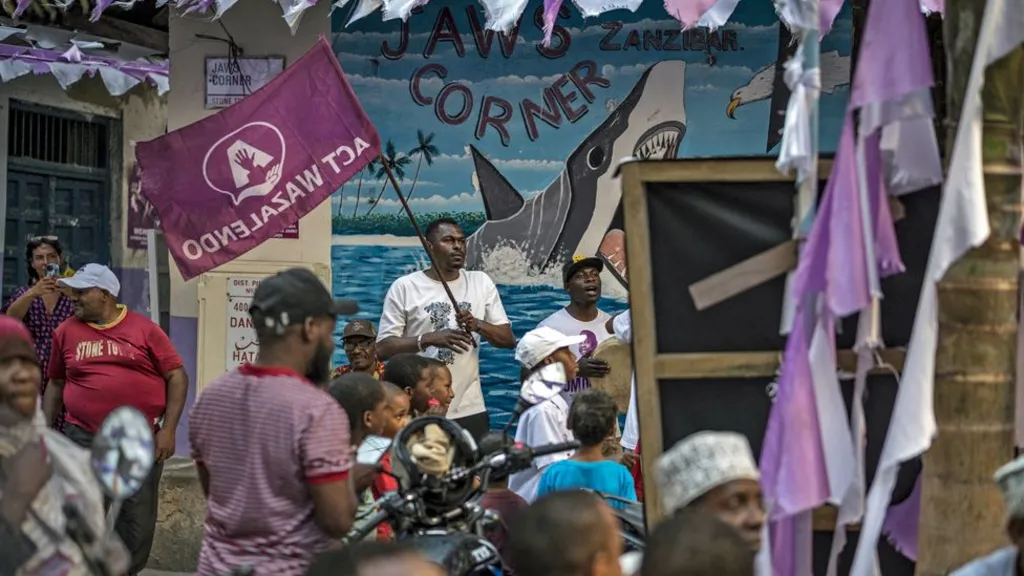
The ruling Chama Cha Mapinduzi (CCM) party, in power since 1992, continues its dominance. Although 17 presidential candidates were approved for the ballot, major opposition figures have been sidelined. Tundu Lissu, leader of the Chadema party, is currently on trial for treason after demanding electoral reforms. His party has called for a boycott, citing intimidation and unfair treatment.
Another prominent opposition hopeful, Luhana Mpina of ACT-Wazalendo, was twice disqualified — most recently after an appeal from the Attorney General. With the two largest opposition parties effectively removed from contention, only minor contenders like Chaumma and CUF remain, giving President Samia an almost certain victory.
Political analyst Nicodemus Minde from the Institute for Security Studies argues that this election lacks credibility: “With limited civic space, institutional bias, and low public engagement, the process risks being a mere formality.”
This sentiment resonates with ordinary citizens like Godfrey Lusana from Dar es Salaam, who expressed frustration: “Without strong opposition, it’s not a real election. We already know the winner.”
Interestingly, while mainland Tanzania’s campaign feels subdued, the Zanzibar race — where Samia originally hails from — has been far more competitive. Regional president Hussein Mwinyi faces a serious challenge from his deputy, Othman Masoud, of ACT-Wazalendo.
On the campaign trail, President Samia has leaned on her nurturing public image, affectionately dubbed “Mama Samia”, promising nationwide development in health, education, and infrastructure. Her leadership has especially resonated with women in rural areas. “She gives us confidence and pride,” said young voter Queen Castoric from Tanga.
Yet, urban youth remain divided. Some feel neglected by the government’s lack of progress on unemployment and rising corruption. “She helped some, but many of us are still struggling,” said Celina Ponsiana, a first-time voter in Dar es Salaam.
Facing skepticism about her authority in a male-dominated political environment, President Samia has grown more assertive, recently reminding supporters: “Don’t forget, I am the commander-in-chief.” Still, internal party critics like Humphrey Polepole, who questioned her uncontested nomination, have mysteriously disappeared, fueling further unease.
Analysts suggest that a shadowy network of powerful business elites, known as Mtandao, now wields significant influence behind the scenes. Some claim that Samia’s leadership has been co-opted by these interests — a stark contrast to Magufuli, who was known for defying them.
Mr. Minde warns that these developments have fostered a climate of fear and silence, where media self-censorship is common and citizens are hesitant to speak freely. “Public discussion has moved from open forums to whispers and social media posts,” he said.
With youth making up the majority of Tanzania’s 37.7 million registered voters, their disengagement could deepen democratic decay. Lawyer and activist Tito Magoti summed up the mood: “We just want a Tanzania where everyone can speak, move, and live freely.”
As the polls open, one thing is clear — for many Tanzanians, this election feels less about choice and more about inevitability.