
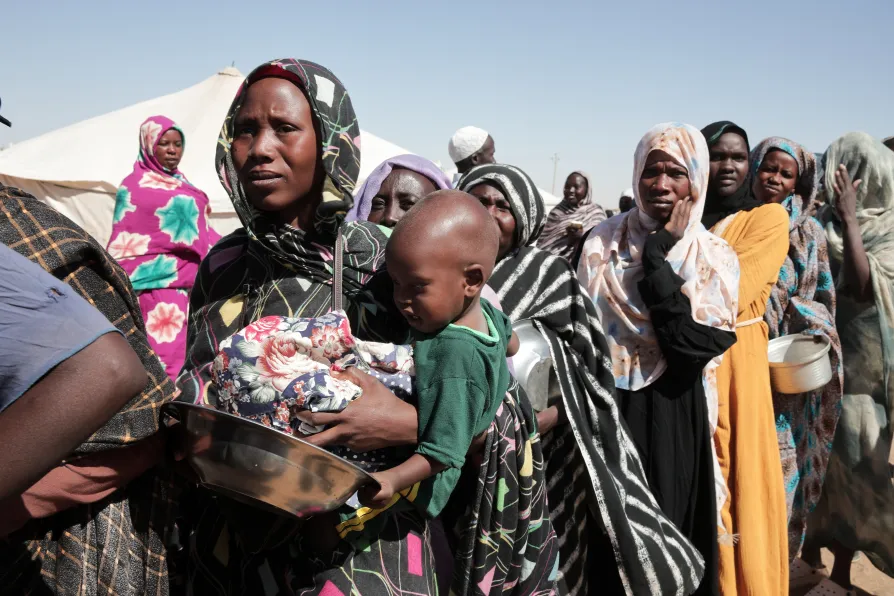
A new investigation has revealed that Sudan’s air force has carried out hundreds of bombings in crowded towns, markets, schools, hospitals and displaced persons’ camps, resulting in the deaths of more than 1,700 civilians since the country’s civil war erupted in April 2023.
The findings come from the Sudan Witness Project, which says it has compiled the most extensive open-source dataset so far on aerial attacks during the conflict. According to the report, the Sudanese Armed Forces (SAF) repeatedly deployed unguided bombs in heavily populated areas — weapons known for causing widespread civilian casualties.
The SAF remains the only faction with warplanes; its rival, the Rapid Support Forces (RSF), relies on drones. The RSF has faced global condemnation for alleged ethnic massacres in Darfur, accusations that have triggered genocide charges from the United States. But analysts say the SAF must also be held accountable for its air campaigns.
Mark Snoeck, who led the investigation, said both sides are responsible for major violations. “The RSF has committed serious abuses, but the SAF’s conduct in the air deserves equal scrutiny,” he noted.
The report documents 384 verified airstrikes from April 2023 to July 2025. These attacks left more than 1,120 people injured, with researchers describing the figures as conservative due to challenges in accessing reliable information from conflict zones.
Residential neighbourhoods were hit at least 135 times, while 35 documented strikes struck busy markets and commercial centres. Nineteen attacks occurred near hospitals, schools, camps for displaced people and other vulnerable population groups.
Investigators say verifying airstrike footage in Sudan is extremely difficult, but through satellite imagery, field reports and social media videos, they were able to build an interactive map showing the scale of civilian harm. Patterns observed across multiple regions reveal repeated strikes on densely populated hubs where no active fighting was reported.
One of the most disturbing incidents highlighted in the report happened at the Zamzam camp for displaced families in North Darfur, where an undetonated air-dropped bomb was discovered. Analysts say the munition matched a locally-produced SH-250 unguided bomb. Snoeck questioned the logic behind dropping such a weapon on an area that was not under RSF control at the time.
Another deadly attack struck Hamrat al-Sheikh Market, where at least 30 people lost their lives and 100 were injured as explosions ripped through the area during peak activity hours.
Darfur has remained one of the most bombarded regions, with Nyala city frequently targeted. While the SAF claims it is attacking RSF supply routes, researchers say the military lacks the precision weaponry needed to avoid civilian casualties, especially in urban areas.
Human Rights Watch and Sudan Witness recorded multiple airstrikes in Nyala in February 2025 that destroyed homes, a grocery shop and businesses near an eye hospital, killing more than 60 people.
Local authorities in al-Kuma, another heavily targeted town, say the community has endured over 30 air raids since the war began. A strike in October 2024 destroyed the town’s main market, killing around 65 residents and injuring more than 200 others.
International observers say air attacks on public spaces not only claim lives but deepen the economic and humanitarian crisis by destroying businesses and essential services.
Despite previous denials, the SAF insists any air operations are lawful and aimed only at RSF positions. However, experts argue both sides have repeatedly used drones and aircraft in ways that intentionally terrorise communities perceived as supporting the opposing faction — conduct classified as war crimes.
Recent months have seen a shift toward more drone attacks by both the SAF and RSF. In October, an alleged SAF drone strike reportedly hit a social gathering in al-Kuma, killing civilians in an area dominated by tribes associated with the RSF. The same weekend, RSF drone and artillery fire in El-Fasher allegedly killed more than 60 displaced people.
Analysts note that despite the immense human cost, neither side has gained significant military advantage through air power. Instead, civilians continue to pay the highest price in a conflict increasingly described as “a war against civilians”