
South Africa has accused the United States of employing foreign nationals without valid work permits at a facility processing refugee applications from white South Africans, escalating diplomatic tensions between the two countries.
The Department of Home Affairs said seven Kenyan nationals were arrested after intelligence reports revealed that individuals had entered South Africa on tourist visas and were illegally working at the centre. Authorities said the arrests followed a targeted operation carried out earlier this week.
According to officials, the individuals had previously been denied work visas but were later found engaging in employment activities in violation of immigration laws. South Africa says the seven will be deported and banned from re-entering the country for five years.
The United States strongly rejected the move, accusing South Africa of interfering with its refugee programme. In a statement, the US State Department condemned what it described as the detention of personnel involved in providing humanitarian assistance to Afrikaners seeking asylum.
South Africa has disputed that claim, insisting that no US officials were arrested and that the operation did not take place at a diplomatic facility. Officials also denied allegations that they unlawfully released passport details of US personnel.
The refugee application processing is being handled by RSC Africa, a Kenya-based refugee support organisation operated by Church World Service. South African authorities said they have contacted both the US and Kenyan governments to resolve the issue through diplomatic channels.
The Department of Home Affairs said the raid demonstrated South Africa’s commitment to combating illegal immigration and visa abuse, noting that this objective aligns with the stated priorities of the United States.
The dispute comes amid worsening relations between South Africa and the administration of US President Donald Trump. The US has sharply reduced its annual refugee intake from about 125,000 to 7,500 but has said it will prioritise applications from Afrikaners, whom it claims are facing persecution.
South Africa has firmly rejected allegations that white Afrikaners are being targeted, stating there is no evidence that white farmers are more vulnerable to violent crime than other groups.
President Trump has repeatedly claimed that Afrikaners are victims of widespread violence, a position he cited when offering them refugee status following the signing of a South African law allowing land expropriation without compensation in limited cases. The South African government maintains that no land has yet been seized under the legislation.
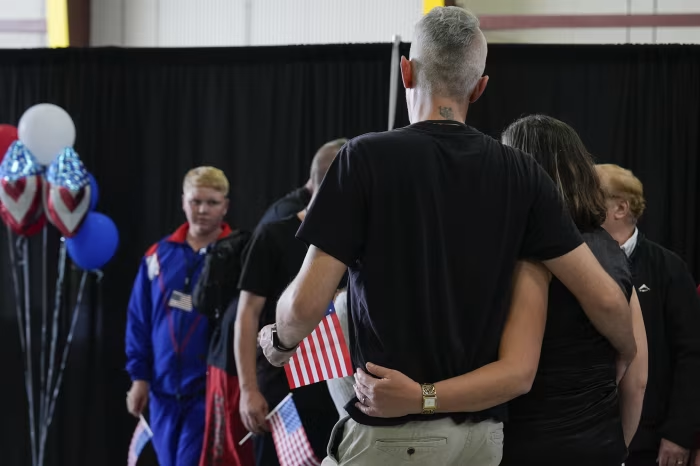
A first group of approximately 50 Afrikaners has already travelled to the United States under the programme, though it remains unclear how many more applications are being processed.
Land ownership remains a sensitive issue in South Africa due to the legacy of apartheid, which left the majority of farmland in white ownership. The government says land reform is necessary to address inequality while stressing that legal safeguards remain in place.
Efforts by South Africa to repair relations with Washington have so far proved unsuccessful. A recent visit by President Cyril Ramaphosa to the White House drew controversy after President Trump presented images and videos alleging persecution of white South Africans.
One clip showed opposition politician Julius Malema chanting a controversial anti-apartheid-era song. However, South African courts have ruled that the chant does not constitute hate speech.
Tensions deepened further last month when the United States boycotted a G20 summit hosted by South Africa and announced it would not invite South African officials to related meetings under its leadership.