
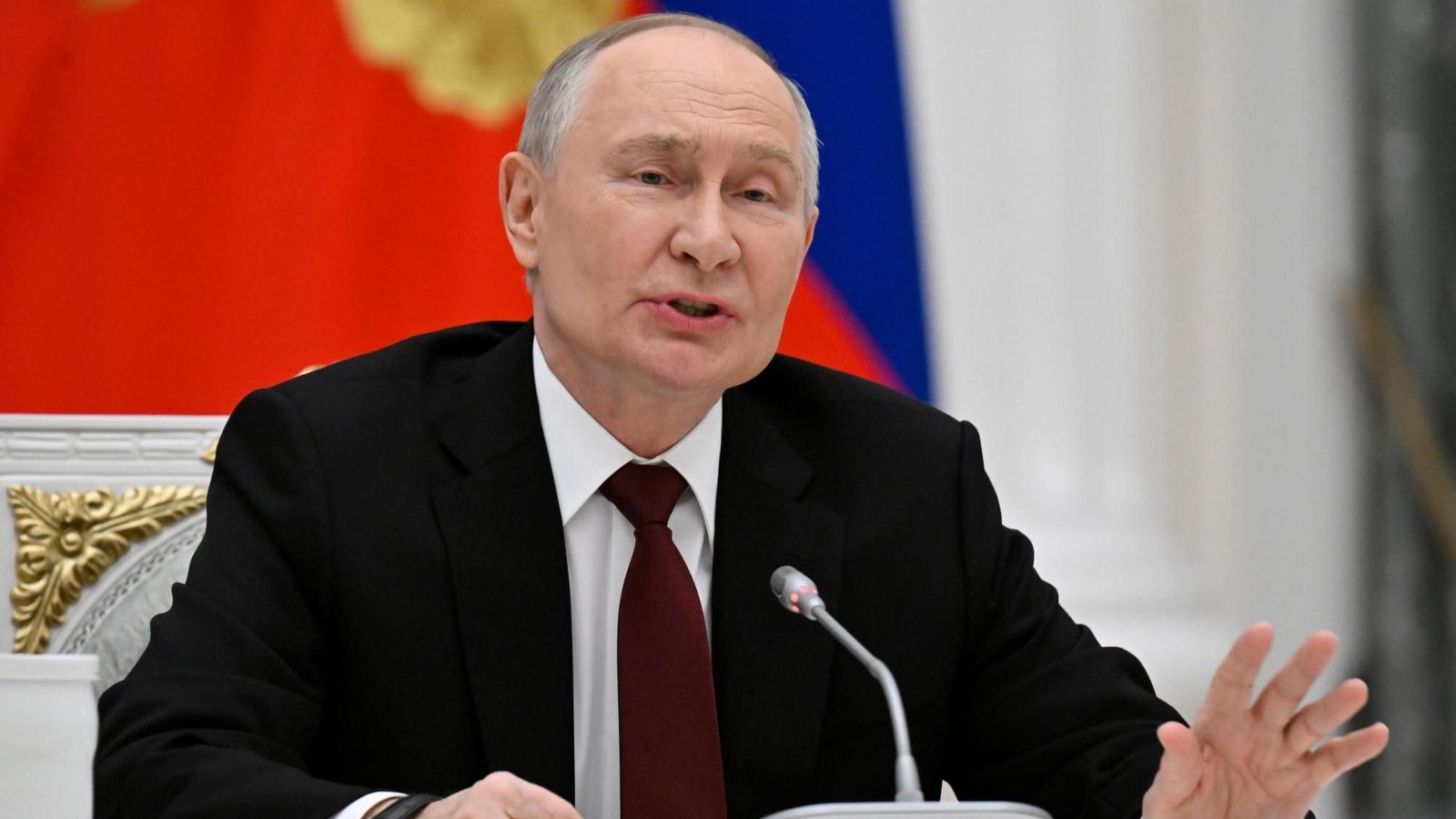
Russian President Vladimir Putin is set to host US special envoy Steve Witkoff in Moscow on Tuesday, in what could become the most significant diplomatic engagement yet in efforts to end the war in Ukraine. Jared Kushner — son-in-law of US President Donald Trump and an outside adviser on talks — is also expected to participate.
The meeting follows two days of intensive negotiations in Florida involving Ukrainian officials, Witkoff, and Kushner. Those discussions were aimed at reshaping a US-backed peace proposal that Kyiv and several European leaders had previously criticised for leaning too heavily toward Moscow’s interests.
Ukrainian President Volodymyr Zelensky described the Florida talks as “constructive,” while stressing that several difficult issues remain unresolved.
Kremlin spokesperson Dmitry Peskov confirmed that Putin will meet Witkoff during the latter half of Tuesday.
Speaking in Paris after talks with French President Emmanuel Macron, Zelensky reiterated that Ukraine’s key demands remain unchanged: full sovereignty, strong security guarantees, and no territorial concessions. The territorial question, he said, remains the “most difficult” aspect of the negotiations. Russia continues to push for Kyiv to surrender eastern territories still under Ukrainian control — a condition Ukraine has repeatedly rejected.
The Moscow talks also come amid conflicting battlefield claims. Russian authorities asserted on Tuesday that their forces had captured the strategic eastern town of Pokrovsk and the border town of Vovchansk. Ukrainian officials did not confirm either claim, and open-source analysts reported that both areas remained contested.
Andriy Kovalenko, head of Ukraine’s Centre for Countering Disinformation, accused Moscow of using its claims to shape the narrative ahead of the peace discussions and to increase pressure on Ukraine.
The Kremlin has spent nearly 18 months attempting to seize Pokrovsk. Over the weekend, Russian state media released footage of Putin visiting a command centre, quoting him as saying Russia had made progress in “an important area.”
Ahead of his Moscow trip, Witkoff also held meetings with UK Prime Minister Sir Keir Starmer, Zelensky, and Ukraine’s chief negotiator Rustem Umerov. Several European leaders joined Monday’s Zelensky–Macron meeting remotely.
At the White House, Press Secretary Karoline Leavitt said the proposed peace plan had undergone “significant refinement,” adding: “We feel optimistic and hopeful that this war can finally come to an end.”
Putin recently acknowledged receiving a draft plan from the US, calling it a potential “basis” for a future agreement. However, Kremlin officials later signalled concerns after Ukraine and European partners secured changes to the original November proposal. That early draft had caused outrage in Kyiv and several European capitals for its perceived alignment with Russian demands and its provisions on how billions in frozen Russian assets should be handled.
Macron said on Monday that there is “no finalised peace plan” yet, stressing that Europe and Ukraine must shape any agreement. He emphasised that only Zelensky can decide on territorial questions and warned that issues such as Russian assets, Ukrainian security guarantees, and EU integration require European involvement.
He also welcomed the Trump administration’s renewed push to end the conflict, which began with Russia’s annexation of Crimea in 2014 and escalated dramatically with the full-scale invasion in 2022.
EU foreign policy chief Kaja Kallas said the week could prove “pivotal,” but cautioned that Moscow prefers to negotiate with those willing to concede to its demands. She warned that pressure may be unfairly placed on Ukraine “because that is the easiest way to force a resolution — but not one that serves anyone’s interests.”
While Russia has shown signs of engagement with US mediation, many of its demands clash directly with Ukraine’s sovereignty and remain unacceptable to Kyiv. Beyond territorial issues, the matter of long-term security guarantees is a major sticking point. Ukraine and its European allies want Kyiv protected from future attacks — potentially through NATO membership — an option Moscow firmly rejects. Trump has also ruled out supporting Ukrainian entry into the alliance.