
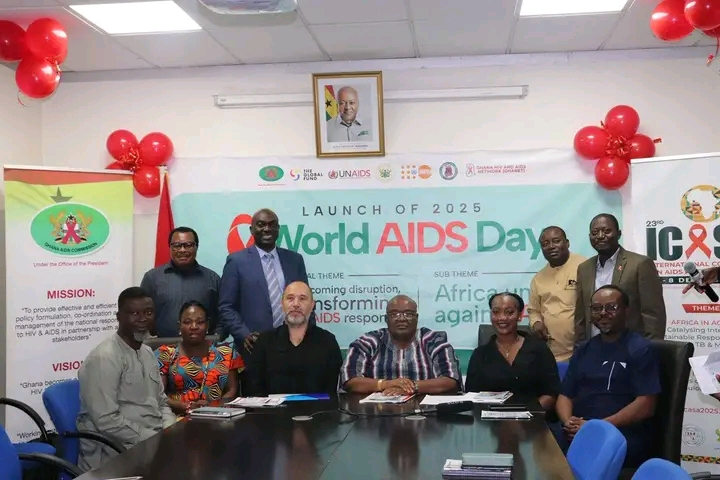
The 2025 World AIDS Day has been officially launched in Accra, with a strong call for the private sector to play a more active and strategic role in Ghana’s fight against HIV and AIDS.
Delivering the keynote message, the Board Chairman of the Ghana AIDS Commission, Kakra Essamuah, Esq., emphasized that while government and development partners have made commendable investments in HIV response efforts, the private sector remains an underutilized ally in sustaining the national campaign against the epidemic.
“For far too long, HIV response has been seen as the sole responsibility of government and external donors,” he noted. “Yet, the disease directly affects our workforce, our productivity, and ultimately, our economic growth. It’s time for businesses to rise to the challenge — to fund workplace HIV programs, support testing campaigns, and protect their human capital.”
Mr. Essamuah stressed that corporate Ghana must collaborate with the Ghana AIDS Commission (GAC) to ensure continuity and sustainability in national response efforts, especially as donor funding gradually declines.
He described the private sector’s involvement as crucial to building a resilient, self-sufficient, and long-term HIV response, capable of safeguarding the nation’s future.
According to him, Ghana has made notable progress through evidence-based interventions in prevention, testing, and treatment, with nearly 70% of people living with HIV now aware of their status, and a growing number accessing lifesaving antiretroviral therapy.
“We’ve achieved a lot, but sustaining these gains requires shared responsibility. Businesses must take ownership of HIV awareness within workplaces and communities,” he said.
The Country Director of UNAIDS in Ghana, Hector Sucilla Perez, also cautioned against complacency, warning that the recent rise in new infections among adolescents and young adults is alarming.
“We cannot allow funding disruptions to define our national response,” Mr. Perez stated. “Our strength lies in how we adapt and act. But we must not grow comfortable — young people are still at risk, and stigma continues to undermine progress.”
He added that stigma and discrimination against persons living with HIV persist across communities, stressing that ending stigma is vital for upholding human dignity and ensuring equal access to healthcare.
This year’s World AIDS Day theme, “Overcoming Disruption, Transforming the AIDS Response,” reflects the global call for renewed collaboration, innovation, and solidarity in the effort to eliminate AIDS by 2030.