
The killing of a 14-year-old orphan in Somalia has triggered widespread outrage and brought renewed attention to the deep-rooted problem of child abuse in the country, particularly within family homes where such cases often remain hidden.
Saabirin Saylaan was murdered in November while living with relatives in the northern city of Galkayo. The disturbing details that emerged during the investigation and trial shocked the nation and led to protests, online campaigns, and renewed calls for stronger child protection laws and enforcement.
A court convicted 34-year-old Hodan Mohamud Diiriye of murdering the teenager and sentenced her to death, making the case one of the rare instances in Somalia where the ultimate punishment has been imposed for child abuse. Diiriye has denied the charges and her lawyer has filed an appeal. Her husband, Abdiaziz Nor, 65, was acquitted of murder but received a one-year prison sentence and a fine for negligence.
Saabirin lost both her parents before she turned one and was raised by relatives who ensured she attended school and Quranic classes. Her life took a tragic turn in September after she was sent to live with Diiriye’s family to work as a house help. According to police investigations, the two months she spent there were marked by repeated beatings and torture.
Authorities recovered videos and audio recordings from Diiriye’s phone that reportedly showed ongoing abuse. Some of the recordings were leaked before the trial, intensifying public anger. In one audio clip, Diiriye was heard expressing pleasure in the child’s suffering. A post-mortem examination revealed multiple injuries and stab wounds, indicating prolonged violence before Saabirin’s death.
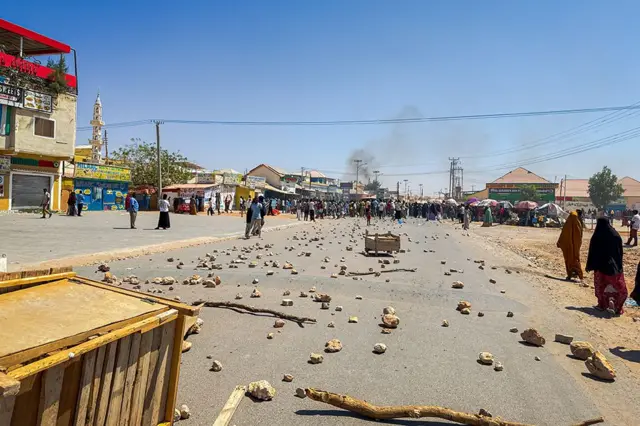
As details became public, hundreds of women and young people took to the streets of Galkayo demanding justice. Demonstrators gathered outside the local hospital morgue where Saabirin’s body was kept, carrying placards and chanting slogans calling for accountability. One protest turned violent, resulting in clashes with police and the death of a young man under unclear circumstances.
Online, young women led solidarity campaigns using Saabirin’s name, rejecting attempts by traditional elders to resolve the case through customary clan settlements. Critics argue that such processes prioritise reconciliation and compensation over justice, often silencing victims and allowing abuse to continue unchecked.
To maintain public confidence, the trial was broadcast live on social media. Regional police officials described the verdict as a landmark moment and warned that anyone else found to be involved would also face the full weight of the law.
Child rights advocates say the case highlights systemic failures in protecting children, noting that abuse within households is widespread but rarely reported. Several recent cases across Somalia have involved extreme violence against children, including arson attacks, sexual assault and the killing of entire families.
In October, Somalia’s parliament ratified the African Charter on the Rights and Welfare of the Child, a move welcomed by activists. However, days later the government clarified that its implementation would be guided by Islamic law and the constitution, with certain provisions—such as banning marriage under 18—not fully enforced. Campaigners say this has raised concerns about how effective the reforms will be in practice.
Government officials in Puntland insist efforts are being made to protect vulnerable children, but acknowledge that abuse occurring within private homes remains difficult to detect. Many cases are never reported due to fear, social pressure or interference by clan elders.
Saabirin’s death has become a symbol of both tragedy and resistance. While some remain sceptical about whether justice will ultimately be carried out, her case has forced an overdue national conversation about child safety, accountability and the urgent need to protect Somalia’s children from violence behind closed doors.