
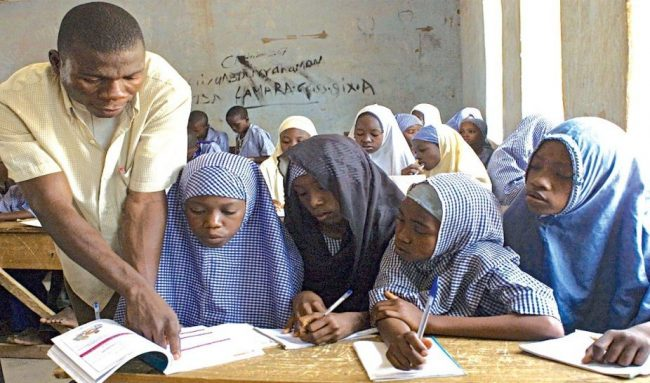
Nigeria has officially scrapped its three-year-old policy that required teachers in early primary classes to use indigenous languages as the main medium of instruction. The government says the programme failed to improve learning outcomes and is reverting immediately to English for all levels of education, from pre-primary to university.
Education Minister Tunji Alausa announced the decision in Abuja, noting that examination data showed a worrying decline in performance in areas that embraced mother-tongue teaching most strongly. He cited results from WAEC, NECO and JAMB as evidence that the policy had not achieved its intended purpose.
The mother-tongue initiative was introduced by former Education Minister Adamu Adamu, who argued that children learn foundational concepts better in their native languages — a view supported by several UN studies. But the rollout faced major barriers, including a lack of trained teachers, insufficient learning materials, and Nigeria’s wide linguistic diversity.
Nigeria’s education sector is already grappling with systemic issues: underfunded schools, teacher shortages, low pay, and frequent strikes. Although the majority of children enroll in primary school, less than half finish secondary education — and an estimated 10 million children remain out of school, the highest number globally.
Reactions to the policy reversal have been mixed. Education expert Dr Aliyu Tilde welcomed the move, arguing that Nigeria was never adequately prepared to implement the mother-tongue system at scale.
“We do not have enough trained teachers for the many indigenous languages in the country. Major examinations like WAEC and JAMB are conducted in English, so switching the classroom language only confused learners,” he said.
Some parents also supported the decision, saying early exposure to English would give children a stronger foundation in the global language.
Others, however, believe the policy was abandoned too quickly. Analyst Habu Dauda said three years was too short to assess the impact of such a significant change, especially without large-scale investment in teacher training and materials.
The decision has reignited debate over Nigeria’s long-standing challenge: how to preserve its diverse linguistic heritage while ensuring students are equipped for a competitive, English-driven global economy.