
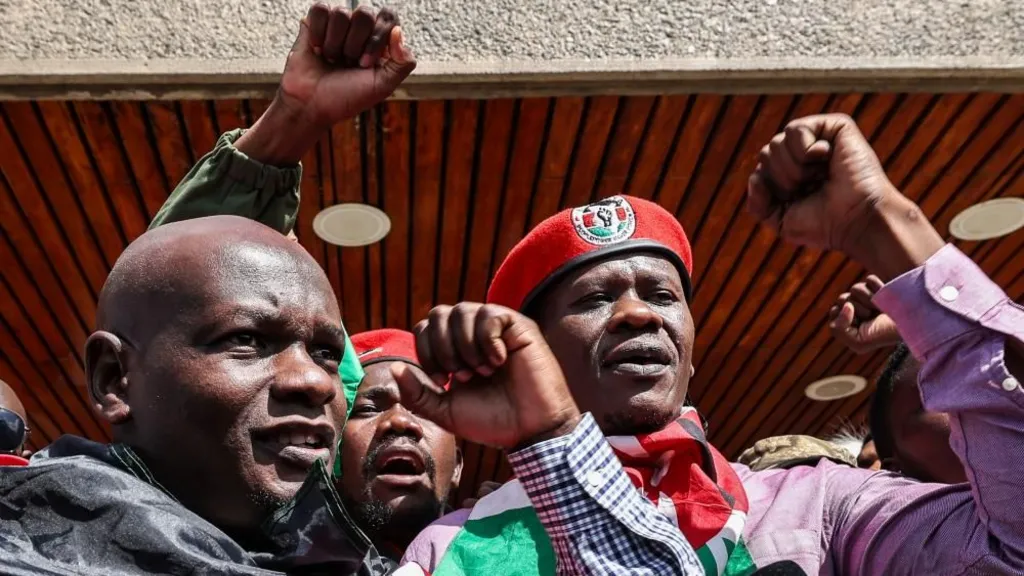
Ugandan President Yoweri Museveni has publicly admitted for the first time that two Kenyan activists who went missing in Uganda for over a month were indeed arrested and secretly held by security agents.
The activists, Bob Njagi and Nicholas Oyoo, disappeared five weeks ago after attending a political event in support of Ugandan opposition leader Bobi Wine. Eyewitnesses reported seeing them forced into a vehicle by masked men in uniform.
While Ugandan authorities had consistently denied detaining the pair, Museveni confirmed their arrest in a live television interview on Saturday, describing the men as “experts in riots” who were “put in the fridge for some days.”
The President, who has ruled Uganda for nearly four decades and is seeking re-election, made the remarks while addressing youth protests in neighbouring Tanzania, accusing unnamed “foreign groups” of instigating unrest in the region. “The ones who are doing that game here in Uganda will end up badly,” he warned.
Njagi and Oyoo were released on Saturday following what Kenyan Foreign Minister Musalia Mudavadi described as “sustained diplomatic engagement between Kenya and Uganda.” Upon arrival at Nairobi’s Jomo Kenyatta International Airport, Njagi recounted their ordeal, saying:
“Thirty-eight days of abduction was not easy. We didn’t think we were going to come out alive because we were taken by the military.”
Human rights organisations, including Vocal Africa, the Law Society of Kenya, and Amnesty International, welcomed their release and thanked both governments for their intervention. In a joint statement, they urged East African states to respect fundamental freedoms and end cross-border abductions of activists.
Opposition leader Bobi Wine, who is contesting next year’s presidential election, accused the government of targeting the two Kenyans for associating with him. “If they committed any offence, why were they not produced before a court and formally charged?” he questioned in a post on X.
Ugandan security agencies have long been accused of abducting opposition members and activists without due process. Many detainees later resurface in court, often facing politically motivated charges.
The incident echoes a pattern of cross-border crackdowns on dissent in East Africa. Last year, Njagi was abducted in Kenya by masked men during a wave of disappearances of government critics and resurfaced only after a court order. Earlier this year, Kenyan activist Boniface Mwangi and Ugandan journalist Agather Atuhaire were detained in Tanzania and later dumped at their national borders after days incommunicado.
These recurring disappearances have drawn regional and international condemnation, raising fears of growing collaboration among East African governments to silence dissent.