
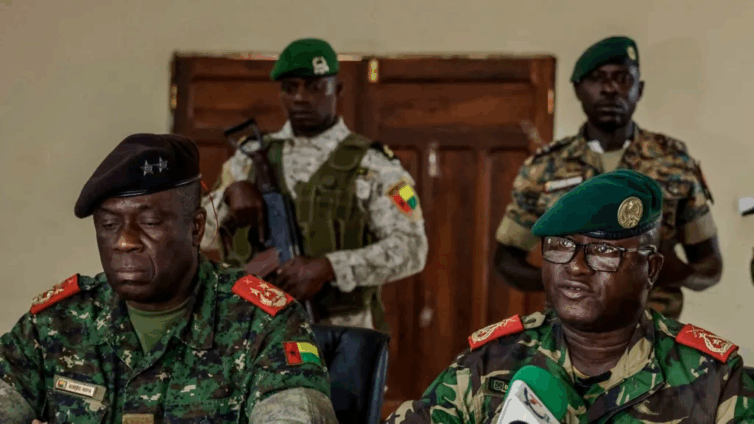
Military officers in Guinea-Bissau say they have taken control of the country following reports that President Umaro Sissoco Embaló has been arrested.
Gunshots were heard in the capital, Bissau, on Wednesday, and government sources later told the BBC that the president had been detained. Shortly afterwards, a group of uniformed officers appeared on state television announcing that they had suspended the electoral process and would assume authority until further notice.
The country had been awaiting the results of Sunday’s presidential election, already marred by controversy after the main opposition candidate was barred from contesting. Both Embaló and his main challenger, Fernando Dias, had claimed victory ahead of Thursday’s expected announcement.
Speaking to France 24 in a phone interview, Embaló said, “I have been deposed,” confirming his removal.
Witnesses reported hearing bursts of gunfire around 13:00 GMT, triggering panic across the city. Hundreds of residents fled on foot and by car as security forces clashed—though details about casualties remain unclear.
Later, General Denis N’Canha, head of the presidential military household, delivered a statement on state TV declaring a military takeover. He said the officers had established a “High Military Command for the Restoration of Order”, sealed the country’s borders, and urged the population to stay calm.
Reports indicate that, in addition to the president, senior military staff and several government ministers have been arrested.
Guinea-Bissau, one of the world’s poorest nations, has a long history of political instability, experiencing nine coups or attempted coups since independence from Portugal in 1974. Embaló himself has claimed to have survived numerous plots during his presidency, though his critics accuse him of inflating threats to suppress opposition.
The country of nearly two million people has also gained notoriety as a major trafficking corridor for cocaine smuggled from Latin America to Europe, earning the label “narco-state” from the United Nations.