
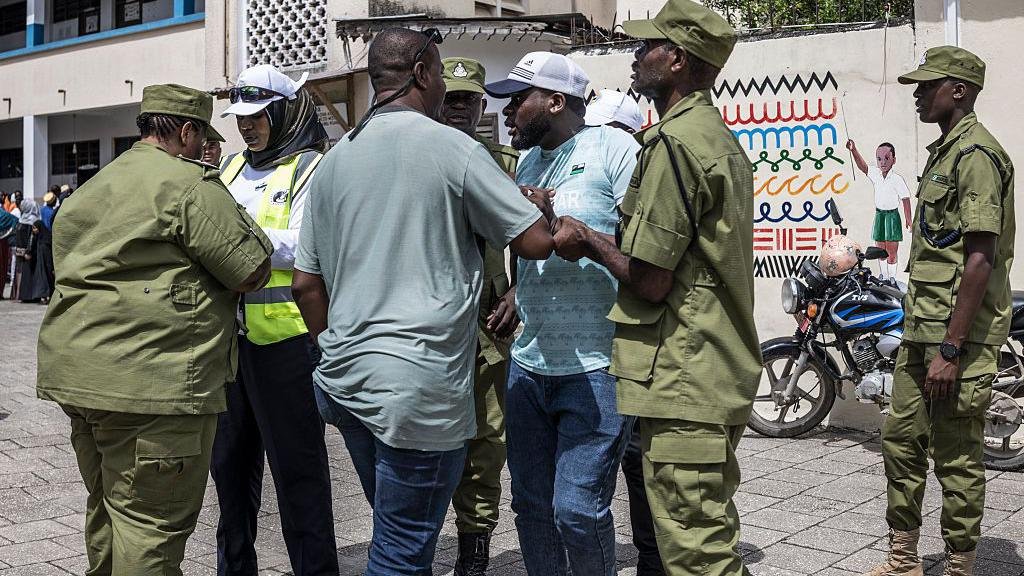
Kenya’s government has called on Tanzania to guarantee the safety and rights of its nationals caught in the wave of post-election unrest that has gripped the country since last week’s disputed polls.
Foreign Affairs Minister Musalia Mudavadi said his ministry had received formal complaints of harassment and violence against Kenyan citizens living in Tanzania, and had since raised the matter with Tanzanian Foreign Minister Mahmoud Thabit Kombo.
In a phone call on Wednesday, Mudavadi said Nairobi expected the matter to be handled “through established diplomatic and consular channels” but stressed that Kenya was deeply concerned about reports of mistreatment.
“We reaffirm the importance of safeguarding the rights, safety, and dignity of Kenyans living and working in Tanzania,” Mudavadi said.
Kenya’s foreign ministry estimates that more than 250,000 Kenyans live or work in Tanzania, particularly in the education, trade, and service sectors.
The appeal follows reports that several Kenyans have been killed, injured, or detained during a violent government crackdown on opposition-led protests in Tanzania.
Tanzania’s President Samia Suluhu Hassan secured 98% of the vote in an election widely condemned by observers as unfree and unfair. Her opponents have accused authorities of vote-rigging and orchestrating a violent campaign to silence dissent.
In her inauguration speech, President Samia blamed foreign nationals for fueling the post-election unrest and vowed to restore order.
However, Kenyan activists have rejected those claims. Hussein Khalid, a prominent human rights advocate, told the Daily Nation that Kenyans were being used as “scapegoats” for the brutality inflicted by Tanzanian security forces on protesters.
“Kenyans in Tanzania are being targeted and harassed. The government must act quickly to ensure their protection,” Khalid said.
One of the victims, John Ogutu, a Kenyan teacher based in Dar es Salaam, was reportedly shot dead by police while buying food, according to his family. Human rights groups say his body has yet to be released for repatriation and burial.
A doctor at Muhimbili Hospital told the BBC that vehicles marked “Municipal Burial Services” had been collecting bodies of those killed during the protests, adding to fears of a cover-up.
The Kenyan Foreign Ministry has now appealed to families to submit the names and contact details of relatives believed to be in distress in Tanzania. It also acknowledged growing frustration over its “slow response” to the crisis and promised to account for all Kenyan nationals affected.
Meanwhile, hundreds of Kenyans working in private schools and small businesses are reportedly fleeing Tanzania, fearing further reprisals. The Tanzanian government has also warned employers not to hire foreigners without valid work permits, a move critics say could deepen xenophobic sentiments.
Tanzania’s government insists that the election was fair and transparent, despite widespread reports of ballot stuffing, intimidation, and violence.
President Samia’s inauguration ceremony was held under tight security at a military parade ground in Dodoma, closed to the public and broadcast live on state TV.
Observers note that Samia, who became Tanzania’s first female leader in 2021 after the death of President John Magufuli, was initially praised for opening political space, but her administration has since returned to authoritarian practices.
Tensions between Kenya and Tanzania—both members of the East African Community (EAC)—have flared periodically over trade disputes and political issues.
In May, several Kenyan and Ugandan activists were deported or reported missing in Tanzania after attending the trial of opposition leader Tundu Lissu, with some later alleging torture and sexual abuse while in custody.