
Prominent West African political figures are casting doubt on this week’s dramatic power shift in Guinea-Bissau, arguing that the apparent overthrow of President Umaro Sissoco Embaló may have been staged.
The president’s supposed removal by the military on Wednesday occurred just one day before authorities were expected to announce presidential election results. Soon after, the military halted the electoral process altogether and blocked the results from being released, saying it was acting to prevent a plot aimed at destabilising the nation.
But Senegal’s Prime Minister Ousmane Sonko and former Nigerian President Goodluck Jonathan have publicly questioned the validity of the takeover, suggesting it was not a genuine coup. Neither offered concrete evidence, yet both expressed suspicion about the speed and manner of the events — especially given that Embaló himself was the one who first announced his own ouster during a phone call to a foreign news channel.
Local civil society groups in Guinea-Bissau have made similar claims, accusing the president of staging a “simulated coup” to delay or block election results if he feared defeat. Embaló has remained silent on the allegations.
The 53-year-old leader was released by the military after his brief detention and flown to Senegal late on Thursday aboard a military-chartered aircraft.
Jonathan, who led an observer mission to Guinea-Bissau, described the episode as a “ceremonial coup” — noting that unlike recent overthrows in the region, this situation appeared unusually controlled and lacked the typical chaos of a genuine military takeover.
Senegal’s Sonko echoed the sentiment, telling parliament that the events in Bissau were “a sham” and calling for the immediate release of the election results.
Opposition voices in Guinea-Bissau have long accused Embaló of exploiting political crises to consolidate power. He previously dissolved parliament following an attempted coup in December 2023, leaving the country without a functioning legislature ever since.
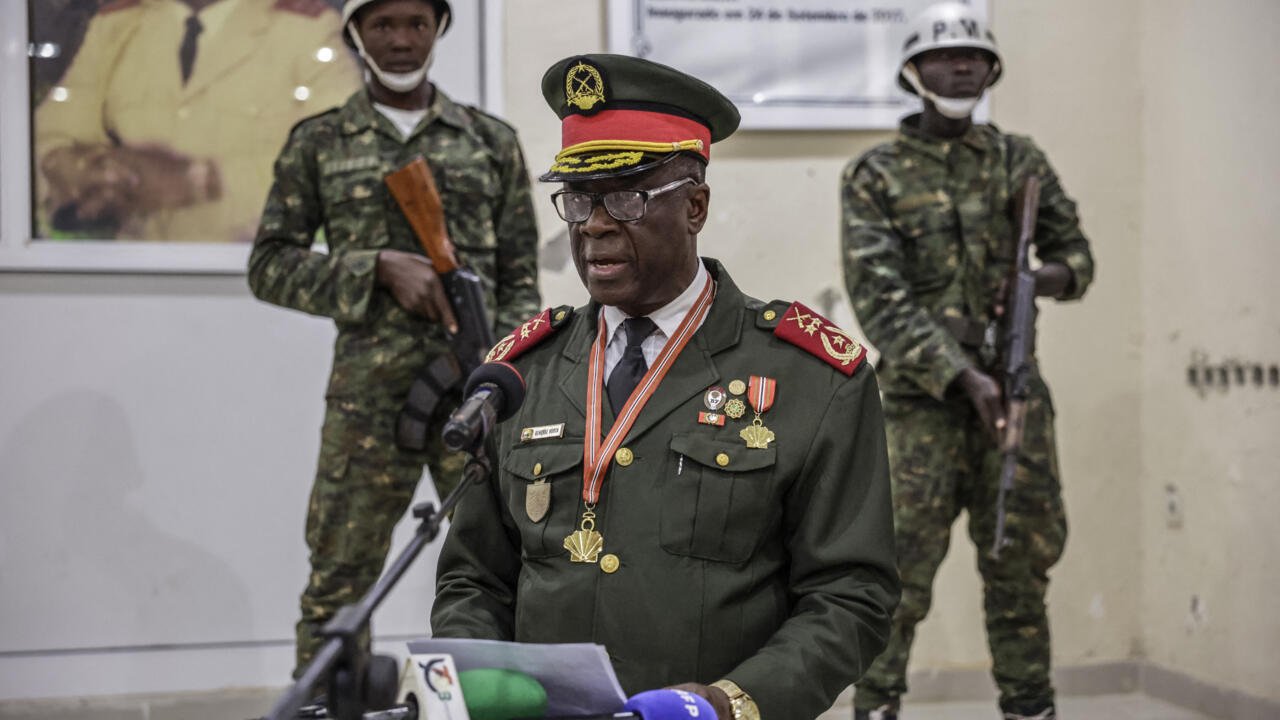
On Friday, transitional leader Gen Horta N’Tam appointed former finance minister Ilidio Vieira Té as interim prime minister. That same day, the African Union suspended Guinea-Bissau from the bloc over what it classified as an unconstitutional seizure of power, and ECOWAS followed with similar measures.
The military claims it intervened to stop a conspiracy allegedly backed by a powerful drug trafficker — a reference that speaks to Guinea-Bissau’s longstanding challenges with organised crime and political instability.
Residents of the capital, Bissau, shared mixed reactions. Some described running for safety as gunfire erupted near the city centre, while others expressed frustration that yet another crisis had pushed the country deeper into uncertainty.
“This only creates chaos,” one resident said, while another argued that a military-led transition could bring improvement if handled responsibly.
Guinea-Bissau, long known for persistent coups and political turbulence, remains on edge as both citizens and regional leaders demand clarity — starting with the release of the election results that triggered the unrest.