
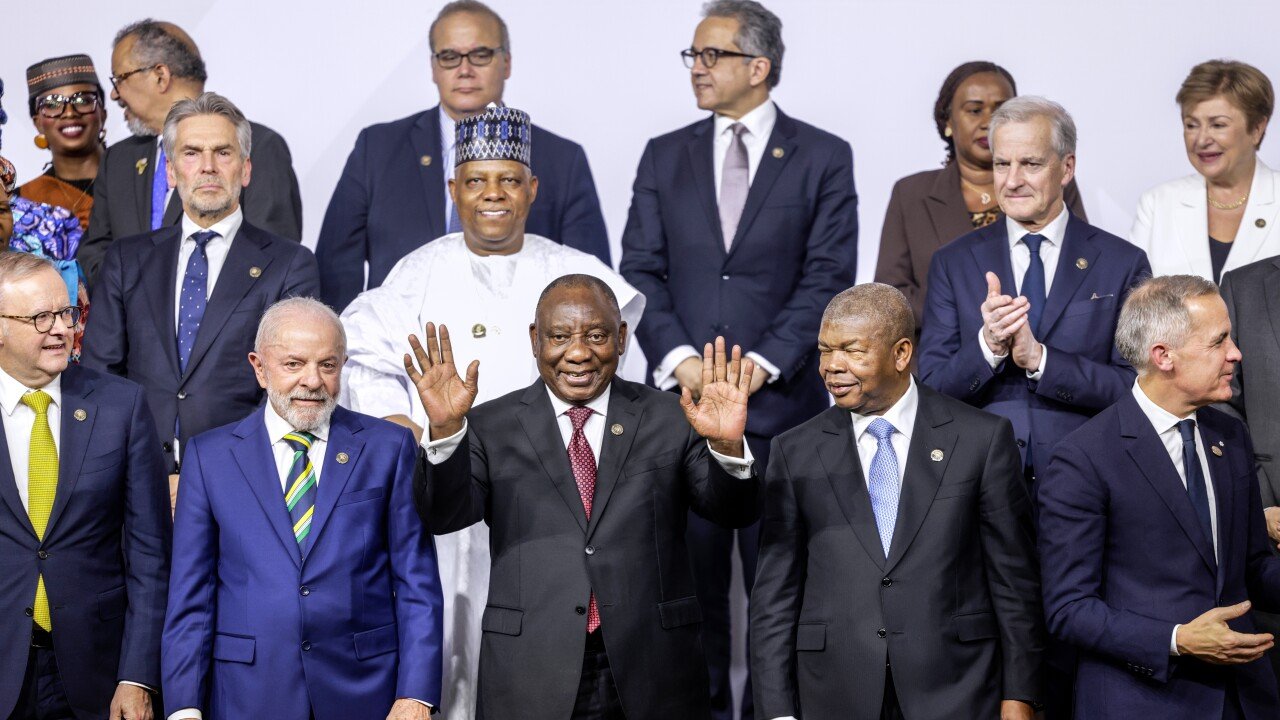
The G20 summit hosted in Johannesburg has wrapped up with member nations endorsing a joint declaration focused on strengthening multilateral cooperation, despite the absence of the United States, which boycotted the gathering.
The final communiqué highlighted commitments to addressing global inequality, tackling climate change, and improving economic collaboration. South African President Cyril Ramaphosa hailed the declaration as proof that the group’s common interests continue to outweigh political disagreements.
US President Donald Trump declined to attend the summit, citing an unsubstantiated claim that South Africa’s white minority faces widespread killings and land seizures — a claim widely rejected by experts and international observers.
This year’s meeting marked a historic milestone as the first G20 summit ever held on African soil, following previous presidencies by Indonesia, India, and Brazil. The US is scheduled to host the summit in 2026, with expectations that it will take place at Trump’s Florida golf resort.
The traditional handover ceremony for the G20 presidency did not take place at the summit’s closing and has instead been postponed to next week, when it will be carried out at a lower diplomatic level.
Brazilian President Luiz Inácio Lula da Silva downplayed the impact of the US boycott, insisting that global cooperation remains strong. German Chancellor Friedrich Merz, however, said the US decision to abstain was “not a good one,” noting that the world is undergoing a major geopolitical shift.
Delegates at the summit also united behind a goal of pursuing “just, comprehensive, and lasting peace” in several conflict zones, including Ukraine, Sudan, the Democratic Republic of Congo, and the Occupied Palestinian Territory.
Sudanese journalist Saeed Abdalla described the inclusion of Sudan as a significant breakthrough, saying it marks one of the first times the G20 has pushed the country’s conflict into international focus after more than two years of unrest.