
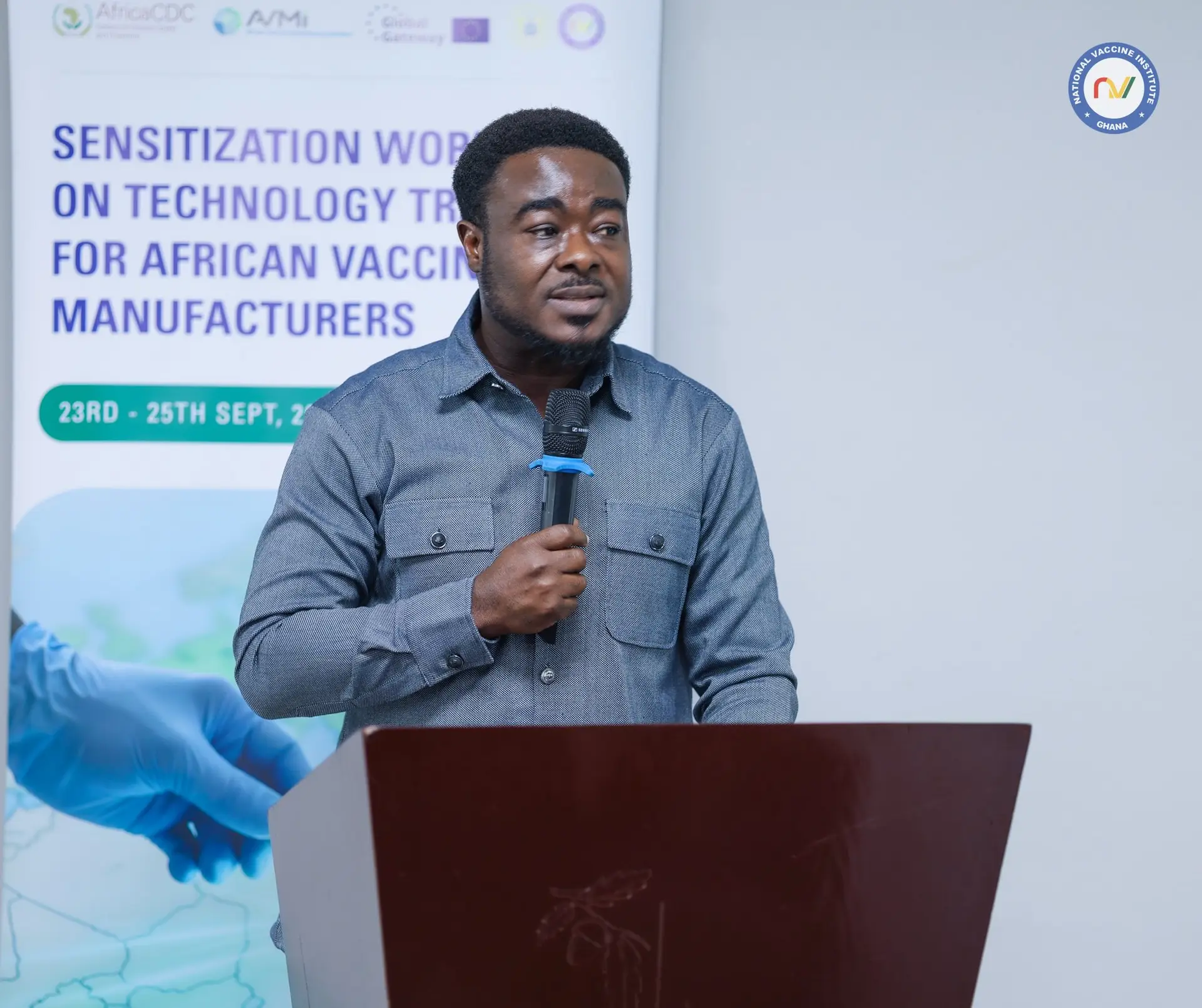
The Chief Executive Officer of the National Vaccine Institute (NVI), Dr. Sodzi Sodzi-Tettey, has underscored the pivotal role of the media in shaping public perception and strengthening trust in vaccines. He said effective communication is as vital as scientific innovation in ensuring vaccine success.
“Vaccines can only save lives when people understand, trust, and accept them — and that’s where the media plays a crucial role,” Dr. Sodzi-Tettey stated. “Vaccines remain one of humanity’s greatest achievements, having saved millions of lives and enabled societies to thrive.”
Dr. Sodzi-Tettey made these remarks during a webinar organized by the NVI in collaboration with the Ghana Health Service (GHS), the Expanded Programme on Immunization (EPI), the World Health Organization (WHO), and the African Media and Malaria Research Network (AMMREN). The virtual training focused on empowering journalists to communicate accurately about vaccines, address misinformation, and counter vaccine hesitancy.
He revealed that Ghana’s vaccination coverage now exceeds 85%, resulting in a sharp decline in vaccine-preventable diseases. However, he warned that misinformation threatens these gains, eroding public confidence and delaying lifesaving interventions.
“The stories told on radio, TV, and online platforms shape how people respond to health initiatives. During the COVID-19 pandemic, misinformation spread faster than the virus itself,” he cautioned.
Dr. Sodzi-Tettey added that ethical, fact-based journalism is key to combating misinformation, strengthening vaccine acceptance, and reinforcing trust in Ghana’s health system.
Establishment of the National Vaccine Institute
Touching on the establishment of the NVI, Dr. Sodzi-Tettey explained that Ghana’s vaccine institute was born out of lessons from the COVID-19 pandemic, which exposed the country’s heavy dependence on imported vaccines.
“Ghana, like many African nations, struggled to secure timely vaccine supplies. It became clear that relying on imports was unsustainable,” he said.
This led to the passage of the National Vaccine Institute Act 1097 in 2023, which established the NVI to coordinate vaccine research, production, and development locally. The institute aims to make Ghana self-sufficient in vaccine manufacturing while contributing to regional health security.
“Our vision is to build a resilient, self-reliant, and innovative vaccine ecosystem that supports both national and regional health needs,” Dr. Sodzi-Tettey added.
Media Partnership and Vaccine Confidence
Executive Secretary of AMMREN, Dr. Charity Binka, praised the partnership between the media and the NVI, describing vaccines as one of the most impactful public health interventions in history.
“Despite the progress, misinformation, hesitancy, and limited understanding continue to undermine public trust,” she said. “Strengthening vaccine communication and building the capacity of journalists is crucial for improving vaccine confidence.”
She urged journalists to serve as “vaccine confidence champions,” using credible reporting to counter misinformation, humanize vaccine stories, and ensure accountability in vaccine access.
“Building vaccine literacy is an investment in national health security. If we want Ghanaians to accept vaccines, we must continuously train journalists to share accurate information,” Dr. Binka emphasized.
Ghana’s Immunization Progress
The Acting Programme Manager for the Expanded Programme on Immunization (EPI), Dr. Selorm Kutsoati, noted that vaccination has significantly reduced cases of diarrhoea and pneumonia among children in Ghana.
“When I was in medical school, diarrhoea was common among children. Today, that has drastically changed thanks to vaccines,” he said.
He further revealed that Ghana is currently in the accelerated phase of its GAVI transition, and by 2030, the country is expected to independently finance its vaccine needs — a goal that will require strategic reforms to address funding gaps.