
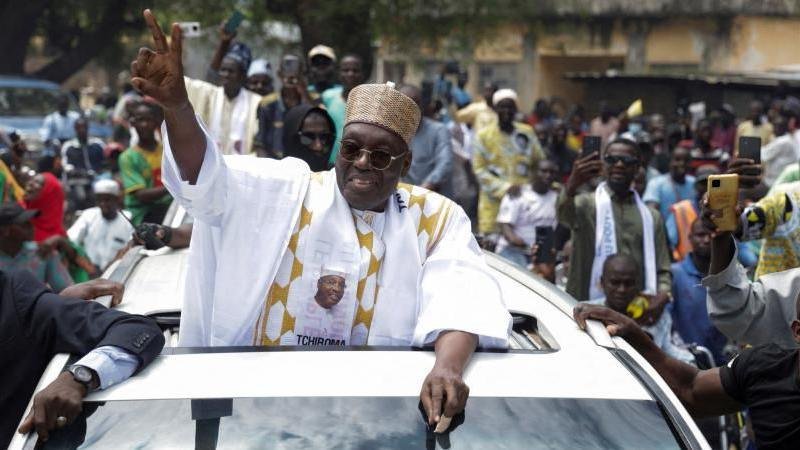
Background of the Presidential Election
The presidential election in Cameroon took place on October 12, serving as a critical moment for the nation’s political landscape. This election was primarily characterized by the participation of two prominent figures: the longstanding incumbent, President Paul Biya, and the opposition candidate, Issa Tchiroma Bakary. Paul Biya, who has held the presidency since 1982, represents the Cameroon People’s Democratic Movement (CPDM) and is known for his extended and controversial tenure, raising questions regarding the democratic process within the nation. His administration has been marked by a lack of political competition and allegations of human rights abuses, leading to a widespread perception of an undemocratic regime.
On the other hand, Issa Tchiroma Bakary emerged as a strong opposition voice, representing the Cameroon Party for the National Salvation (CPN). His candidacy was notable as he aimed to galvanize support among the populace that is increasingly disillusioned with Biya’s governance. The political climate leading up to this election was charged, as various factors including economic difficulties and social unrest, notably from the Anglophone crisis, fueled public discontent. These circumstances have influenced voter sentiment and have contributed to a heightened demand for change.
In previous elections, the legitimacy and fairness of the electoral process in Cameroon have been heavily scrutinized by both local and international observers. Accusations of electoral fraud, suppression of dissent, and manipulation of electoral laws have plagued past administrations, further complicating the current electoral milieu. As a result, many citizens approached the October 12 election with skepticism regarding the fairness of the voting process and the counting of votes. This context underscores the significance of the election and highlights the necessity for a transparent and credible electoral process, as voiced by various stakeholders, including the bishops of Cameroon who have called for calm amidst the ongoing controversies.
Declaration of Victory and Official Responses
In a surprising turn of events, Issa Tchiroma Bakary has publicly declared himself the victor of the recent elections in Cameroon, a move that has elicited strong reactions from various sectors of the political landscape. His assertion of victory came before the official announcement of results from the Constitutional Council, which has yet to provide a definitive account of the electoral outcome. This premature claim of triumph not only undermines the established legal frameworks governing electoral processes but also raises questions regarding the integrity of the election results.
The government’s response has been notably critical of Tchiroma’s declaration. Officials from the ruling party have denounced his self-proclamation as illegal and a blatant disregard for the electoral regulations that are in place to ensure a fair and transparent process. They have emphasized the importance of waiting for the official results, which are expected to be released within a stipulated timeframe following the electoral procedures. This criticism reflects a concern that such declarations could incite unrest or create further division among the electorate.
Adding to the tension is the fact that the absence of final results from the Constitutional Council has left many Cameroonians in a state of uncertainty. The timeline for these results remains unclear, prompting widespread speculation and concern about the potential for unrest in the coming days. Political analysts are closely monitoring the situation, suggesting that the lack of clarity may fuel discontent among the population. The ramifications of Tchiroma’s bold statement and the government’s firm denunciation not only impact the current political climate but also the social stability and unity of the nation as the public grapples with the evolving situation.
Role of the Catholic Church in Promoting Peace
The Catholic Church in Cameroon holds a significant position as a moral authority, especially during periods of political instability and electoral disputes. With the recent controversy surrounding elections, the bishops of the Church have reiterated their commitment to fostering peace. Their role transcends spiritual guidance; it embodies social advocacy aimed at ensuring fairness in the electoral process and safeguarding the rights of the populace. The Church’s leadership, through various communiqués, has emphasized the need for transparent elections that reflect the will of the people. This stance underscores the belief that a just electoral process is foundational to national unity and social harmony.
The moral authority of the bishops manifests in their public statements and actions, which urge political leaders to act responsibly and prioritize the welfare of citizens over partisan interests. In their call for calm, the bishops serve as mediators, appealing to both government officials and citizens to engage in dialogue rather than resorting to violence. This role is crucial, especially in a socio-political context where tensions can lead to unrest. The Church, through its established reach and trust within the community, mobilizes its congregations to promote peace and encourage civil order, making it a pivotal player in maintaining social stability.
The current political climate in Cameroon, marked by heightened tensions following the recent elections, poses significant implications for national stability and future governance. Widespread fears of potential violence loom over the population, as citizens express deep concerns about the aftermath of the electoral process. Instances of political unrest and public dissent could emerge if grievances stemming from the election are not adequately addressed. The President, Paul Biya, has faced increasing scrutiny regarding his governance style and policies, leading to public sentiments that question his ability to steer the country towards stability and progress. The outcome of the Constitutional Council’s ruling will play a critical role in shaping future political engagement in Cameroon. A ruling perceived as unjust could exacerbate divisions and spark protests, undermining democratic processes. Conversely, a fair and transparent decision might foster a renewed sense of hope and encourage greater public participation in governance. The citizens’ confidence in the electoral process hinges on the integrity of this ruling, making it pivotal for the future of democracy in Cameroon. The message conveyed by the bishops, underscoring the judiciary’s responsibility to uphold justice and fairness, cannot be overstated. Their appeal to the judges emphasizes the necessity for impartiality, which has the potential to influence not only the immediate ramifications of the elections but also the broader landscape of governance moving forward. By advocating for calm, the bishops highlight the importance of unity in a time when fragmentation could easily prevail. Ultimately, the bishops’ call for peace serves as a reminder that the stability of Cameroon is intertwined with the public’s trust in its institutions. A commitment to transparency, fairness, and justice is essential in fostering an environment conducive to national unity and effective governance for all citizens. The future of Cameroon depends on the collective actions taken to ensure that democracy flourishes amidst challenges. Implications for National Stability and Future Governance