
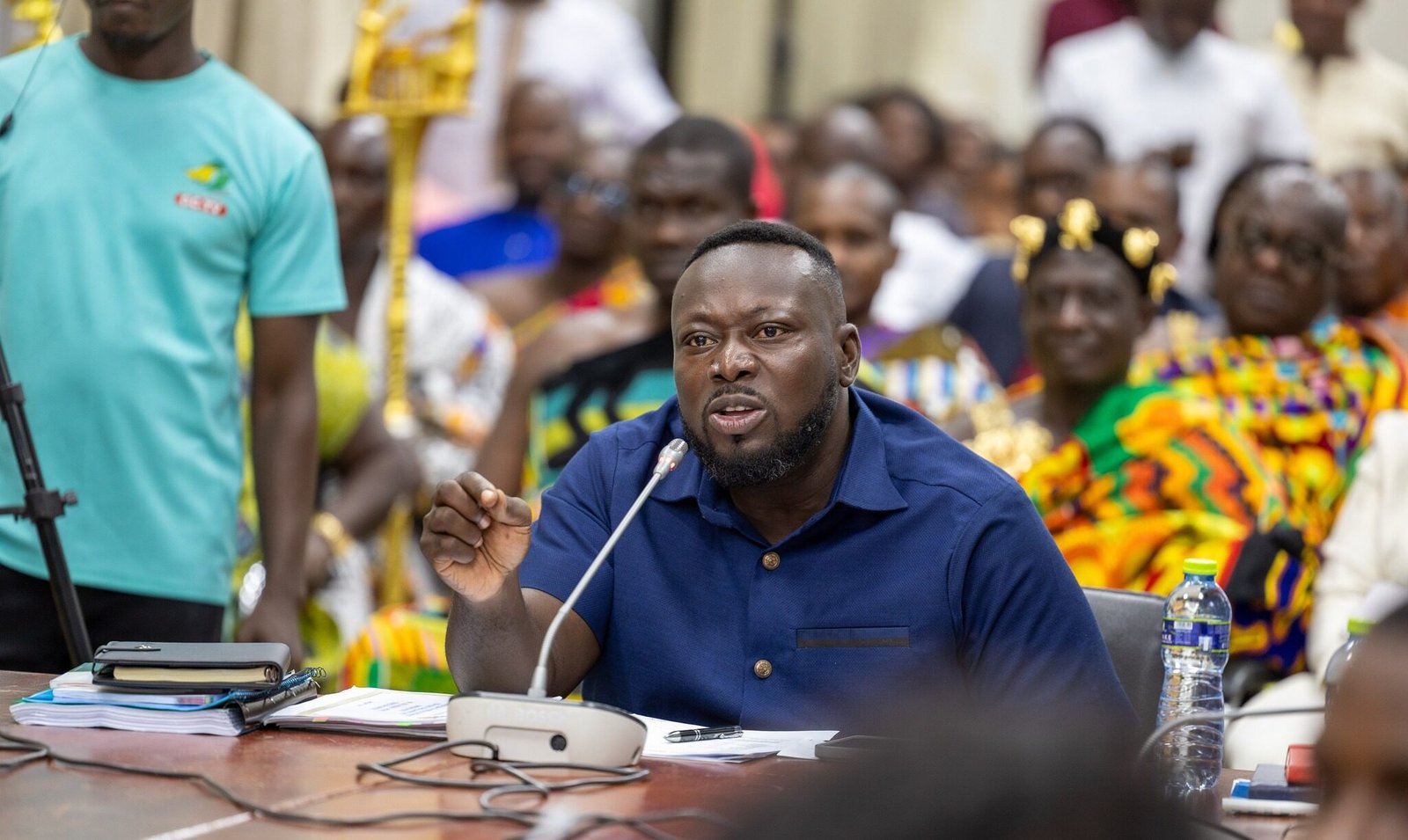
Ghana’s Youth Minister Raises Alarm Over Rising Drug Use Among Students
Minister for Youth Development and Empowerment, George Opare Addo, has raised alarm over the increasing exposure of Ghanaian students to drug use, describing it as a “national crisis that threatens the future of the country’s youth and workforce.”
Speaking on the state of Ghana’s youth in Accra, the Minister disclosed that 41% of tertiary students and 37% of senior high school (SHS) students have been exposed to drugs. He said the figures are alarming and call for an urgent, coordinated national response to tackle the growing menace of substance abuse among young people.
According to him, drug use is becoming widespread on school campuses, with many students experimenting with substances such as alcohol, marijuana, synthetic pills like the popular “red 2-2-5,” and even hard drugs including cocaine and heroin. He noted that access to these substances has become easier through street vendors, peers, pubs, and online delivery systems, making prevention and enforcement increasingly difficult.
“The problem is no longer confined to street corners,” Mr. Opare Addo cautioned. “With courier services and social media platforms, young people can now order drugs discreetly, avoiding detection and supervision.”
The Minister further highlighted that reasons behind student drug use vary — ranging from curiosity and peer influence to stress, academic pressure, and emotional struggles. He revealed that 26% of first-time users are between 14 and 15 years old, while 41% fall between ages 16 and 17, making early intervention critical.
“Early exposure affects memory, learning, and emotional control,” he said. “It leads to truancy, poor academic performance, and long-term addiction that destroys potential.”
Mr. Opare Addo also noted that drug abuse has ripple effects on families and communities. “When one person falls into addiction, it affects the entire household. It’s no longer an individual issue — it’s a social problem,” he emphasized.
The Minister lamented that only 36% of educational institutions currently offer counselling and support services for students facing drug-related problems. He called for urgent investment in counselling programs, awareness campaigns, and psychosocial support systems across schools.
He announced that the Ministry for Youth Development and Empowerment is collaborating with the Ministries of Health and Education, as well as civil society organizations, to develop a comprehensive national strategy focused on prevention, treatment, and youth rehabilitation.
“Every young person lost to drugs is a lost opportunity for Ghana,” Mr. Opare Addo stressed. “Our youth are the strength and foundation of our nation. Protecting them from substance abuse must be a collective duty.”